Cat breed · England
Devon Rex
Mèo Devon Rex

The Devon Rex has huge low-set ears, big expressive eyes and a short, wavy, tissue-soft coat. CFA (Cat Fanciers' Association): The world's largest registry of pedigree cats, based in the US. It keeps pedigree records, writes breed standards and runs cat shows. All terms jokes that crossing a cat with an elf would give you a Devon [1]. Devons are playful, clever and intensely attached to their people [1]. CFA says it's the most popular shorthaired breed by registrations [1], and fifth overall [2]. It's recognised by CFA, TICA (The International Cat Association): An international cat registry based in the US and one of the largest. It often recognizes newer breeds before CFA does. All terms [8], FIFe (Fédération Internationale Féline): The International Feline Federation, an umbrella body of cat clubs, mostly in Europe. All terms [5] and GCCF (Governing Council of the Cat Fancy): The UK's oldest pedigree cat registry (since 1910). All terms [4].
Contents (10 sections)
Quick facts
- Origin
- England (Devon, 1959)
- Weight
- ~2.7–4.1 kg
- Lifespan
- ~12–16 years
- Coat
- short, wavy
- Energy
- high
Details & sources
- Size
- Small to medium, with surprising heft and muscle [1]
- Weight
- Typically 6–9 lb (2.7–4.1 kg); males may be somewhat larger [1]
- Lifespan
- GCCF (Governing Council of the Cat Fancy): The UK's oldest pedigree cat registry (since 1910). All terms estimates 12–16 years [4]; no breed-specific longevity study found
- Coat
- Short, wavy and tissue-soft, with sparse, short guard hairs [1]
Traits (scale 1–5)
- Energy
- 4/5
- Shedding
- 1/5
- Grooming needs
- 1/5
- Good with kids
- 5/5
- Vocal
- 3/5
- Independence
- 1/5
Basis: Editorial estimate based on CFA (Cat Fanciers' Association): The world's largest registry of pedigree cats, based in the US. It keeps pedigree records, writes breed standards and runs cat shows. All terms 's description, not a measurement
Recognized by major cat registries
Cat registries keep pedigree records and set the standard for each breed. Tap an abbreviation to see what it means.
| CFA (Cat Fanciers' Association): The world's largest registry of pedigree cats, based in the US. It keeps pedigree records, writes breed standards and runs cat shows. All terms US | Yes |
|---|---|
| TICA (The International Cat Association): An international cat registry based in the US and one of the largest. It often recognizes newer breeds before CFA does. All terms international, US-based | Yes |
| FIFe (Fédération Internationale Féline): The International Feline Federation, an umbrella body of cat clubs, mostly in Europe. All terms Europe | Yes |
| GCCF (Governing Council of the Cat Fancy): The UK's oldest pedigree cat registry (since 1910). All terms UK | Yes |
History
In 1959 a curly-coated male kitten turned up in a litter born in a garden in Devon, England [1]. Beryl Cox gave him a home and named him Kirlee. He was assumed at first to carry the Cornish Rex mutation, but test matings proved otherwise [1]. Kirlee was bred to his own offspring to produce more wavy-coated kittens, a very different look from the Cornish Rex's tight curl. His descendants were later outcrossed to several breeds, which is why Devons come in so many colours and patterns [1]. In 2010 researchers located the Devon curl mutation on the KRT71 gene [3].
Appearance
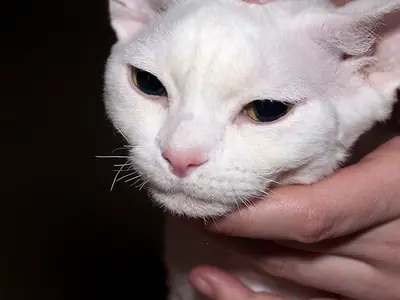
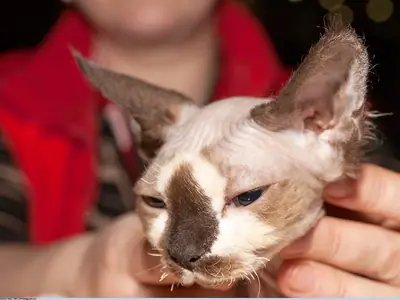
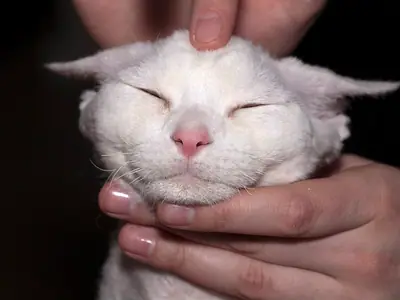
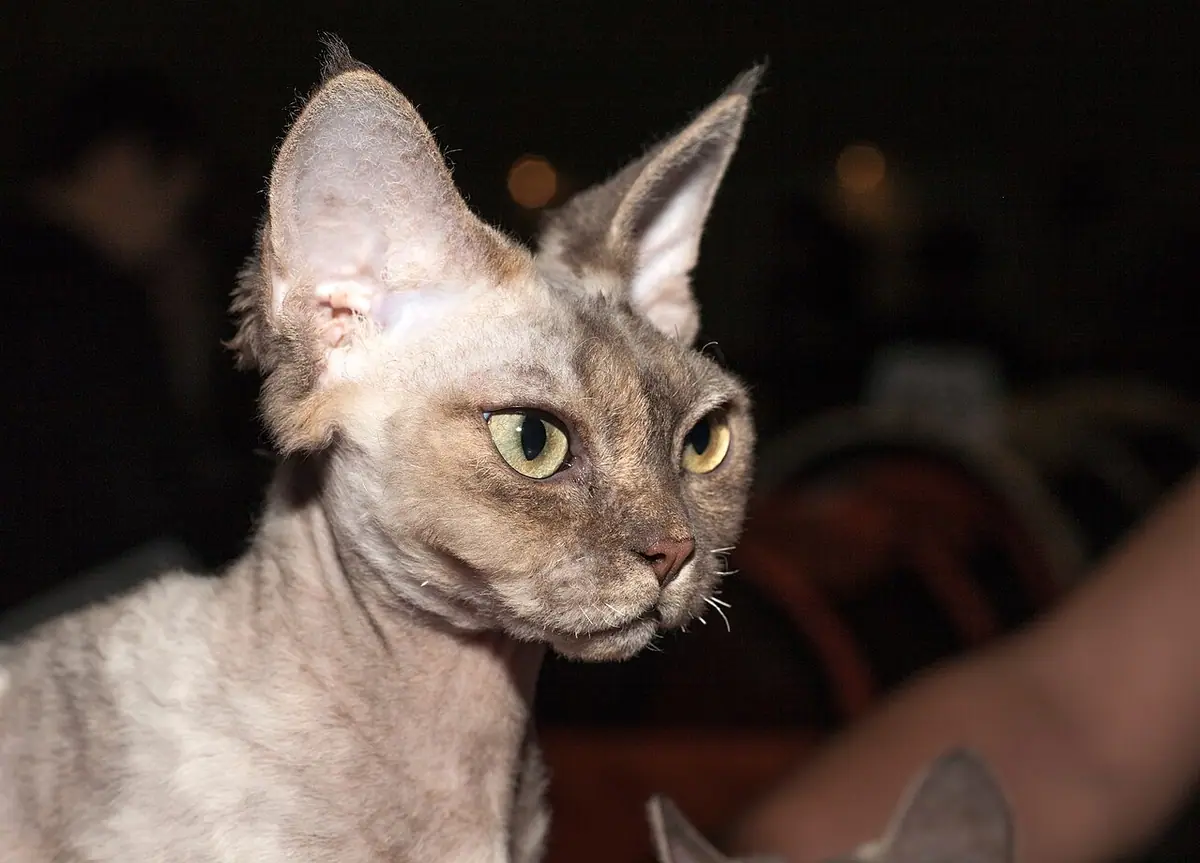
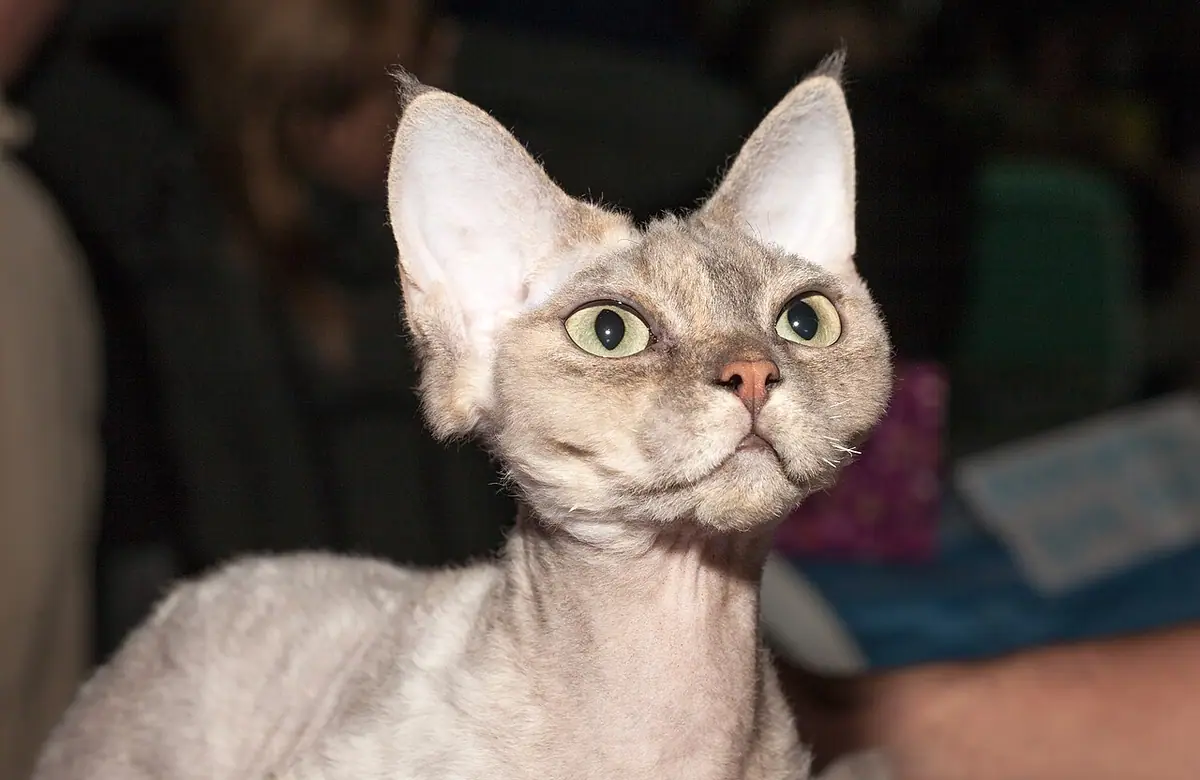
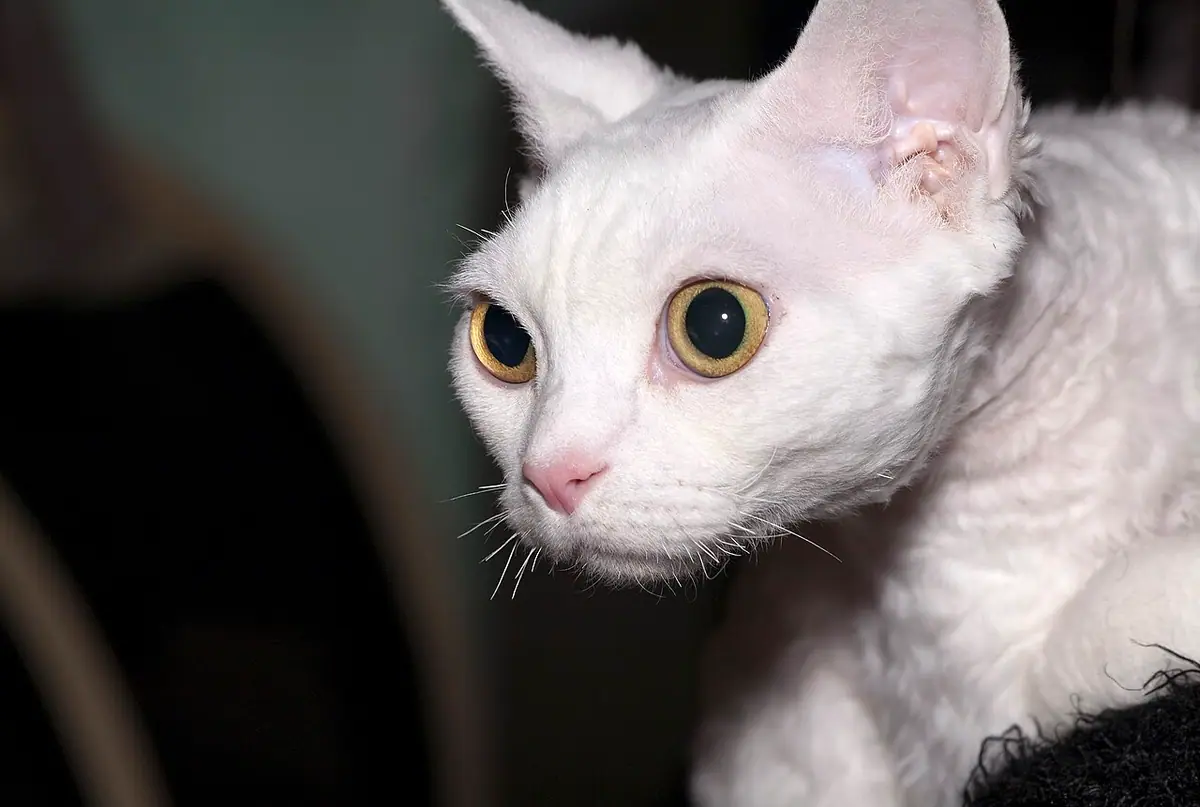
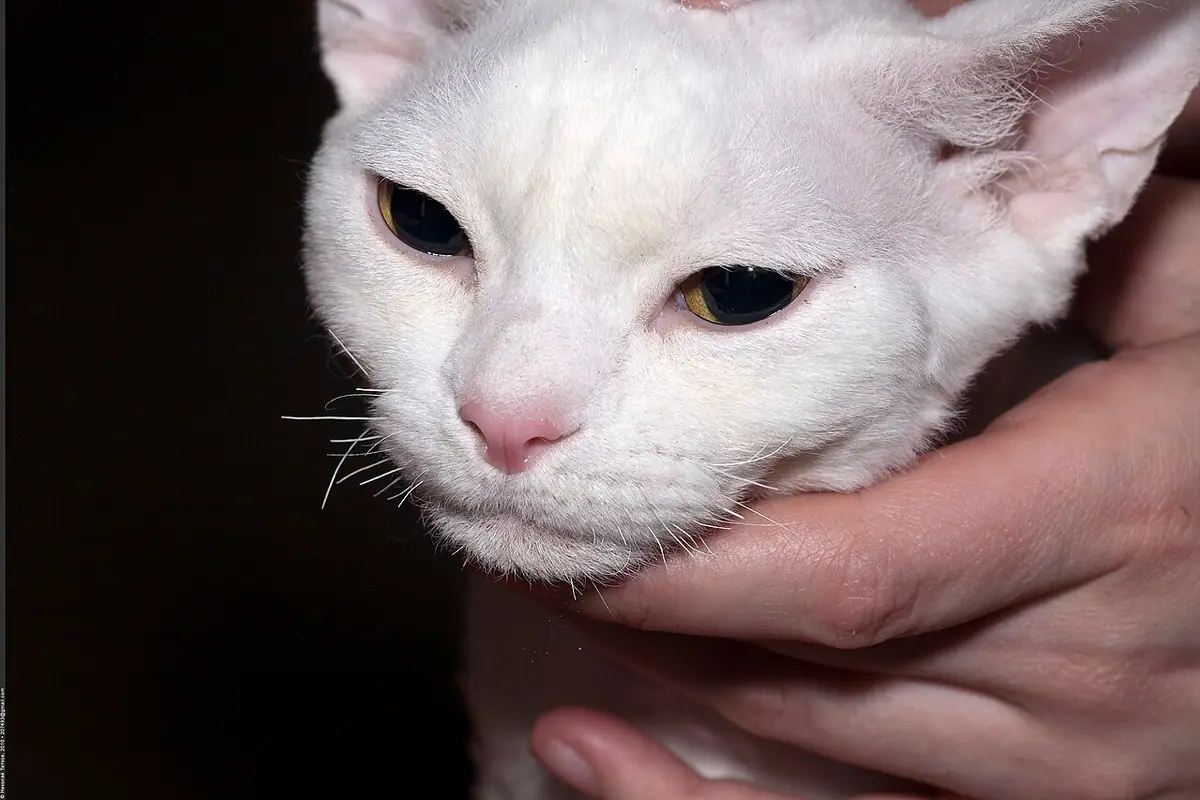
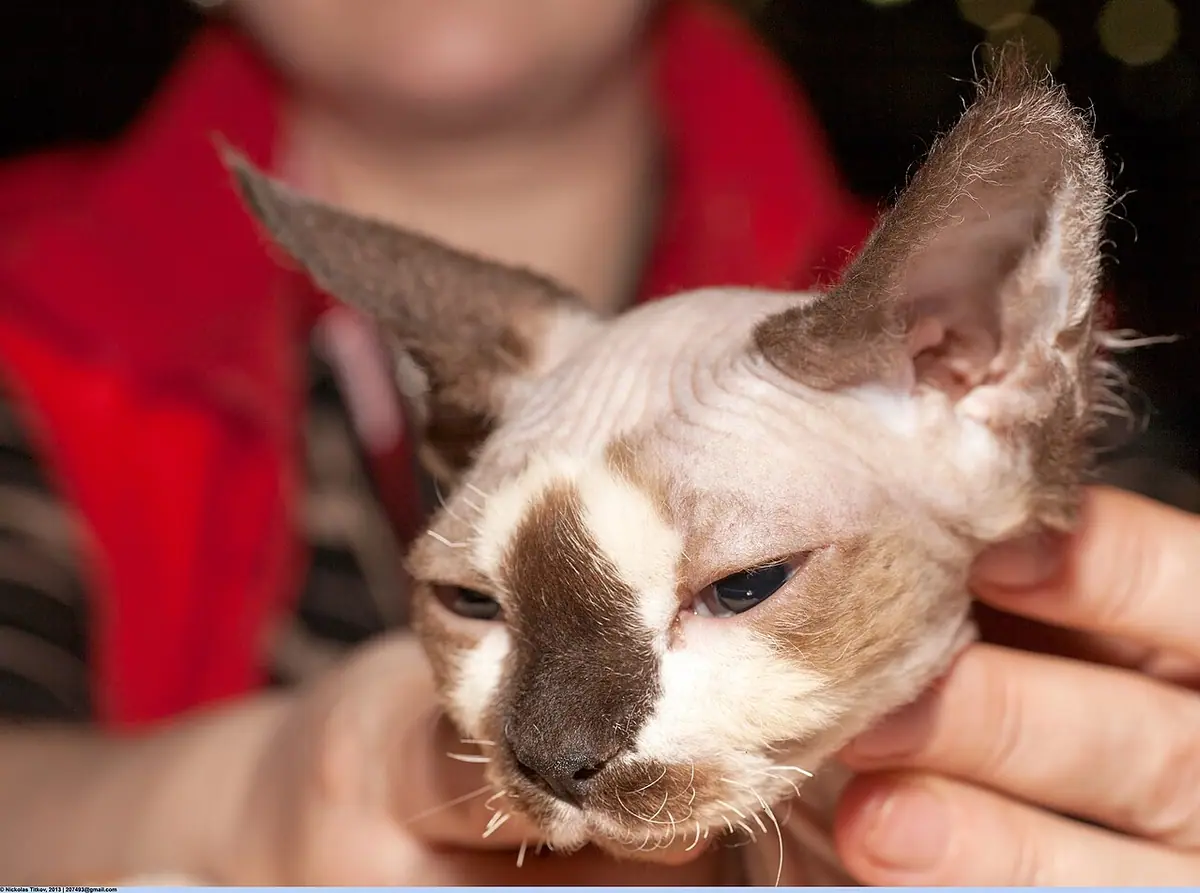
- Head: large expressive eyes, huge ears set low on the sides of the head, wide cheekbones and a mischievous expression [1].
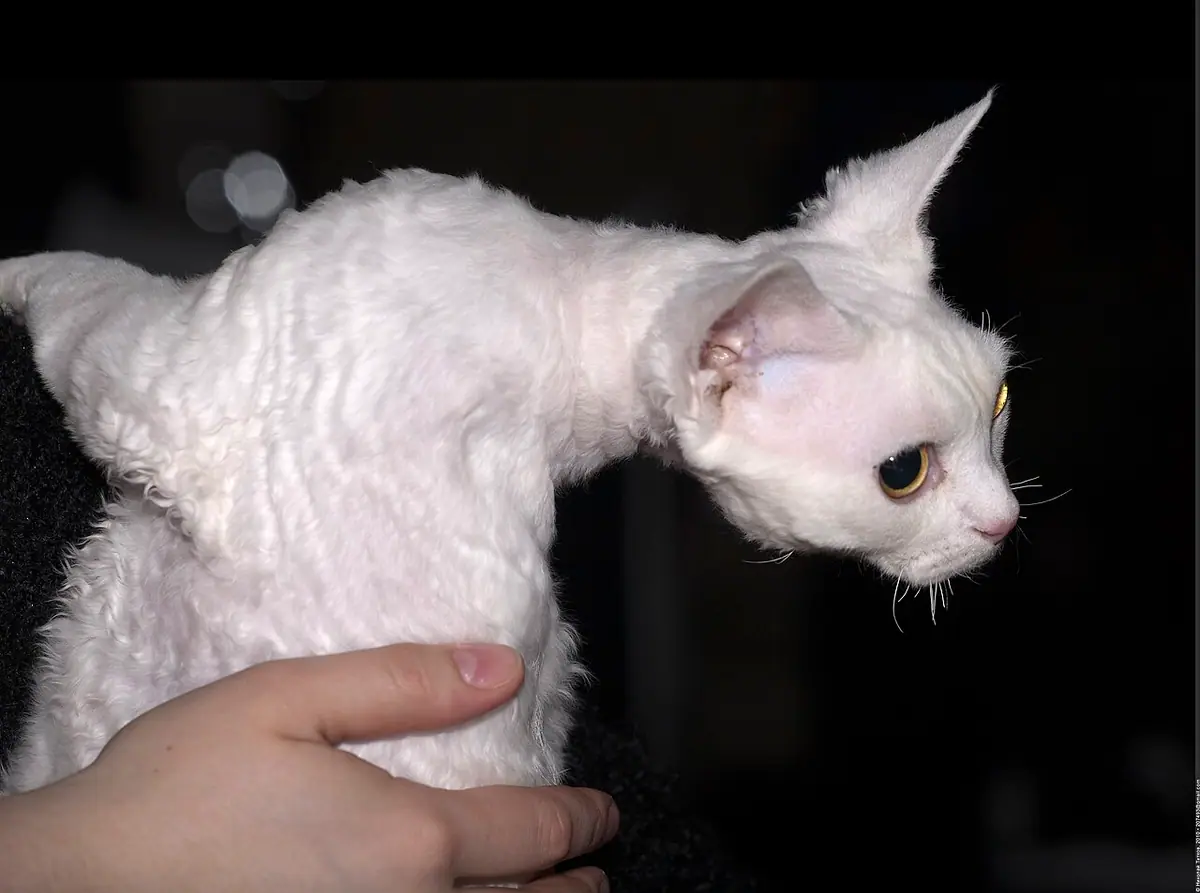
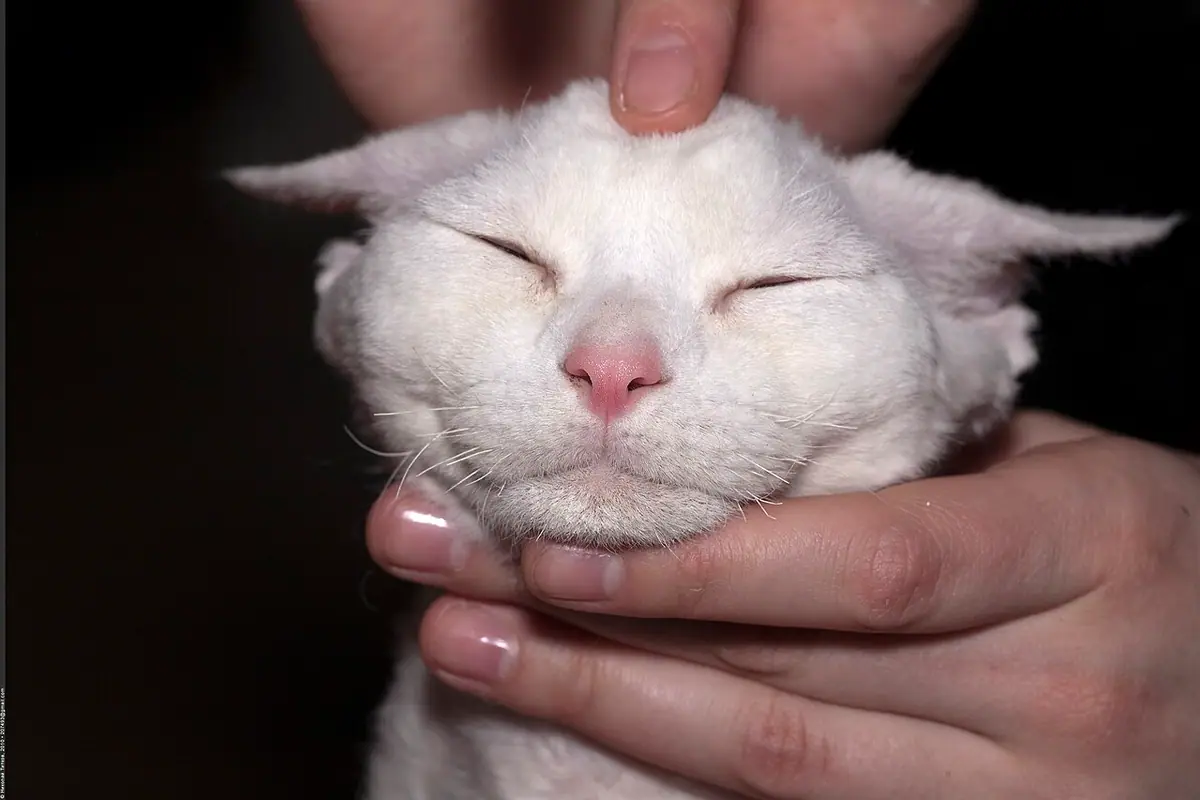
- Coat: short, wavy and tissue-soft. Devons have a few sparse, short guard hairs, so density, texture and length vary, and there may be occasional bare or "sueded" patches [1].
- Whiskers and eyebrows: curly too, but brittle [1].
- Body: small to medium but surprisingly solid, with a broad chest, slender neck and front legs often held in a "bulldog" stance [1].
- Weight: typically 6–9 lb [1].
Photo gallery
7 photos · tap to enlarge- (enlarge, photo 1/7)
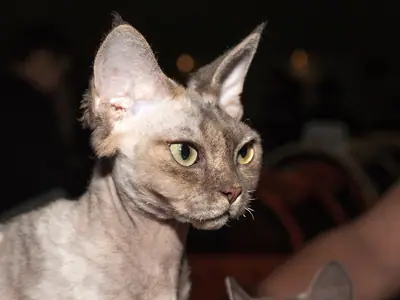
- (enlarge, photo 2/7)
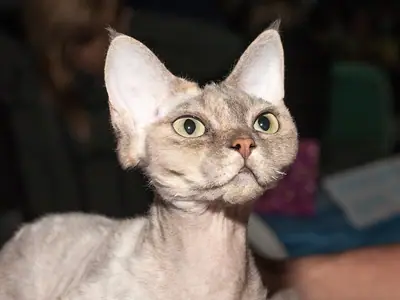
- (enlarge, photo 3/7)
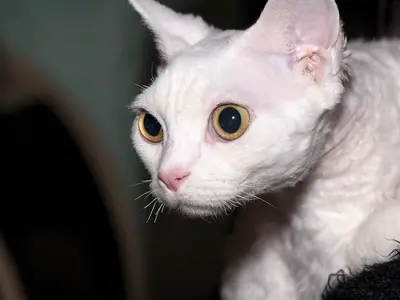
- (enlarge, photo 4/7)
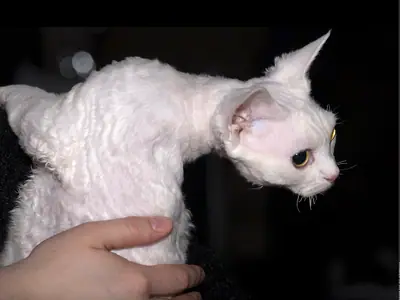
- (enlarge, photo 5/7)
- (enlarge, photo 6/7)
- (enlarge, photo 7/7)
.jpg)
Photos: Wikimedia Commons - author & licence shown when enlarged and on the Photo credits page.
Temperament
Part court jester, part soulmate, Devons want to be everything to everyone [1]. They're bright, learn their names, follow you around, snuggle up in bed, and may even join you in the shower [1]. They're talkative but not noisy, with soft chirps, trills and purrs [1]. Every visitor is a new friend; they accept dogs and other pets readily and are great with children [1]. They dislike being left alone for long [1].
Care
Health
- Blood type B: common in the breed. If a type A male is bred to a type B female, kittens can die from blood-type incompatibility unless hand-raised at first. Blood typing is essential for breeders, and it's worth knowing your own cat's type [1].
- Coat and whiskers: occasional bare patches; brittle whiskers [1].
- Lifespan: GCCF estimates 12–16 years [4]. We found no breed-specific longevity study.
Ask breeders about blood typing, and talk to your vet about any specific concern.
Don't confuse with…
- Cornish Rex: no guard hairs, tight marcel waves, a slender arched body [6].
- Selkirk Rex: sturdy, with a thick coat of loose ringlets [7].
- Sphynx: nearly hairless; its mutation sits on the same KRT71 gene [3].
Ask your vet. This information is for reference only and does not replace a veterinary diagnosis.
Cat facts
Frequently asked questions
Are Devon Rex cats hypoallergenic?
No. CFA (Cat Fanciers' Association): The world's largest registry of pedigree cats, based in the US. It keeps pedigree records, writes breed standards and runs cat shows. All terms says Devons shed less than most breeds and may be tolerated by some people sensitive to cats, but contrary to popular belief they are not hypoallergenic [1].
Does a Devon Rex need grooming?
Very little. They're easy-care, wash-and-wear cats [1]. The coat is fragile and can have thin or bare patches, so handle it gently [1].
Can a Devon Rex be left alone?
They don't like it. Devons bond intensely with their people and dislike long periods alone. They follow you everywhere, sleep beside you and help with everything [1].
Similar breeds


Breed photos: Wikimedia Commons (CC0 / CC BY / CC BY-SA) - authors & licences on the Photo credits page.
References
- CFA, Devon Rex (breed profile & standard)
- CFA, Most Popular Breeds for 2026 (Devon Rex #5, based on 2025 registrations)
- Gandolfi B et al. (2010). The naked truth: Sphynx and Devon Rex cat breed mutations in KRT71. Mammalian Genome 21
- GCCF, Cat Breeds (Devon Rex breed card)
- FIFe, Breeds (DRX Devon Rex, fully recognised)
- CFA, Cornish Rex (breed profile & standard)
- CFA, Selkirk Rex (breed profile & standard)
- TICA, Browse All Breeds (Devon Rex listed)
Accessed: 2026-10-02
CFA, TICA, FIFe and GCCF are the major cat registries in the US, Europe and the UK. See the glossary
Written by Catopedia from the sources above. Photos credit their author and licence under each image and on the Photo credits & licences.