Cat breed · United States
Selkirk Rex
Mèo Selkirk Rex

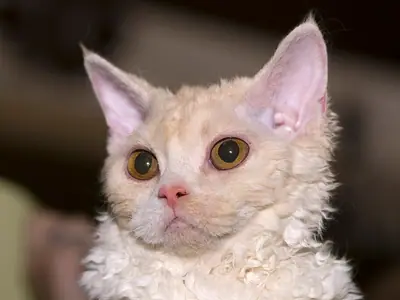
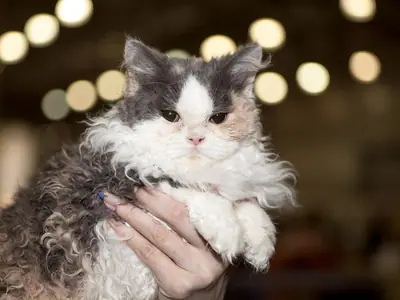
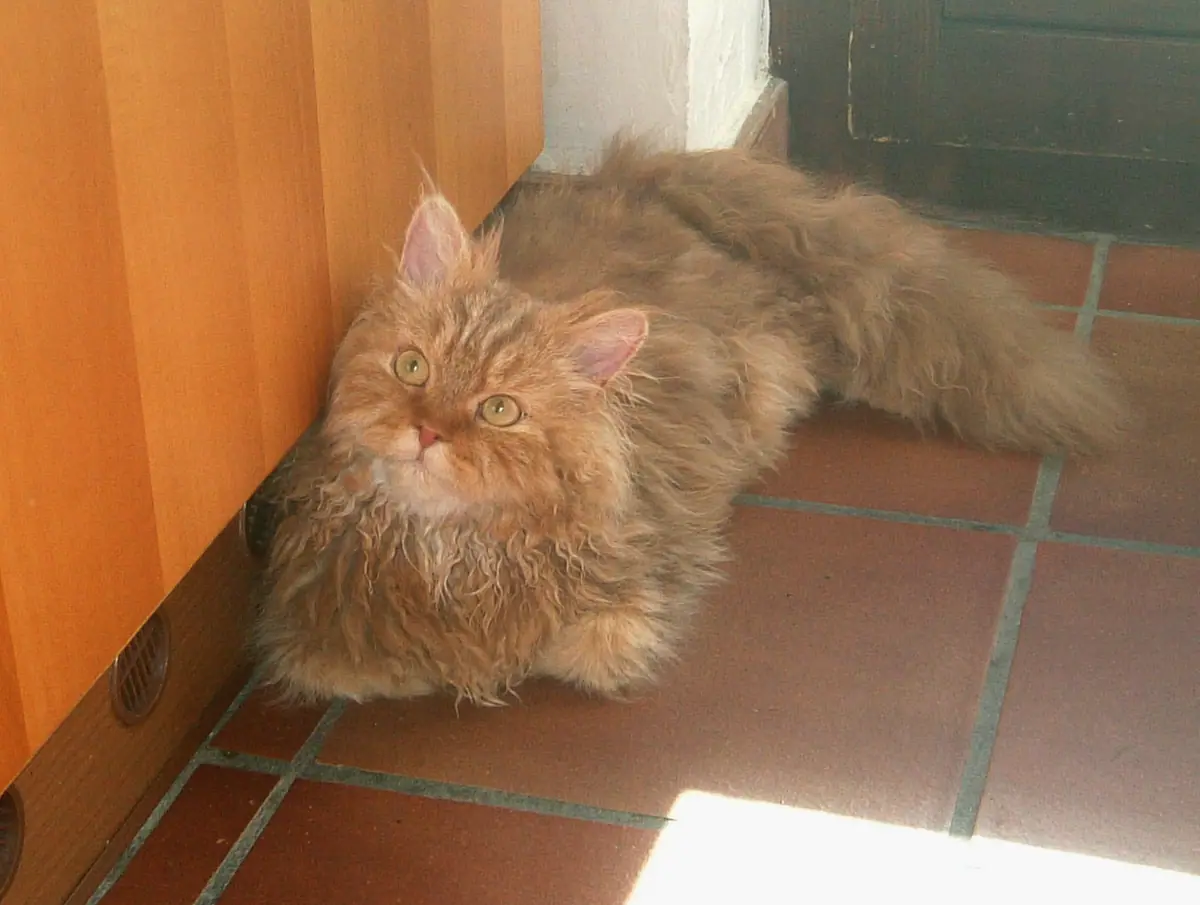
The Selkirk Rex is sometimes called "the cat in sheep's clothing", thanks to a coat of loose individual curls that go every which way, like a permanent bad hair day [1]. It's a medium to large, solidly built cat with a round head and round, luminous eyes [1]. Selkirks are patient, affectionate lap cats [1][2]. The breed is recognised by CFA (Cat Fanciers' Association): The world's largest registry of pedigree cats, based in the US. It keeps pedigree records, writes breed standards and runs cat shows. All terms [1], TICA (The International Cat Association): An international cat registry based in the US and one of the largest. It often recognizes newer breeds before CFA does. All terms [2], FIFe (Fédération Internationale Féline): The International Feline Federation, an umbrella body of cat clubs, mostly in Europe. All terms [4] and GCCF (Governing Council of the Cat Fancy): The UK's oldest pedigree cat registry (since 1910). All terms [3].
Contents (10 sections)
Quick facts
- Origin
- Montana, USA; from a curly-coated kitten born in the mid-1980s (1986 per CFA, 1987 per TICA)
- Weight
- ~4.1–7.3 kg
- Lifespan
- ~10–15+ years
- Coat
- curly, short or long
- Energy
- moderate
Details & sources
- Weight
- CFA (Cat Fanciers' Association): The world's largest registry of pedigree cats, based in the US. It keeps pedigree records, writes breed standards and runs cat shows. All terms : adult males 12–15 lb (5.4–6.8 kg), females somewhat smaller [1]; GCCF (Governing Council of the Cat Fancy): The UK's oldest pedigree cat registry (since 1910). All terms estimates 9–16 lb (4.1–7.3 kg) [3]
Traits (scale 1–5)
- Energy
- 3/5
- Shedding
- 3/5
- Grooming needs
- 3/5
- Good with kids
- 4/5
- Vocal
- 2/5
- Independence
- 2/5
Basis: Editorial estimate based on CFA and TICA descriptions, not a measurement
Recognized by major cat registries
Cat registries keep pedigree records and set the standard for each breed. Tap an abbreviation to see what it means.
| CFA (Cat Fanciers' Association): The world's largest registry of pedigree cats, based in the US. It keeps pedigree records, writes breed standards and runs cat shows. All terms US | Yes |
|---|---|
| TICA (The International Cat Association): An international cat registry based in the US and one of the largest. It often recognizes newer breeds before CFA does. All terms international, US-based | Yes |
| FIFe (Fédération Internationale Féline): The International Feline Federation, an umbrella body of cat clubs, mostly in Europe. All terms Europe | Yes |
| GCCF (Governing Council of the Cat Fancy): The UK's oldest pedigree cat registry (since 1910). All terms UK | Yes |
History
The breed began with a spontaneous mutation in a litter born in Montana, USA; CFA gives the year as 1986 and TICA as 1987 [1][2]. The foundation female, with curly whiskers and a coat that looked permed, was adopted by Persian breeder Jeri Newman and named Miss DePesto [1][2]. Bred to a black Persian male, she produced three curly kittens out of six, showing the new rex gene to be Dominant gene: One copy from either parent is enough for the trait to show. All terms [1]. TICA accepted the breed into its New Breed programme in 1990 and granted championship status in February 1994 [2]. CFA accepted it for registration in 1992 and for championship in 2000 [1]. TICA credits the British Shorthair, Persian and Exotic with shaping the breed's temperament [2].
Appearance
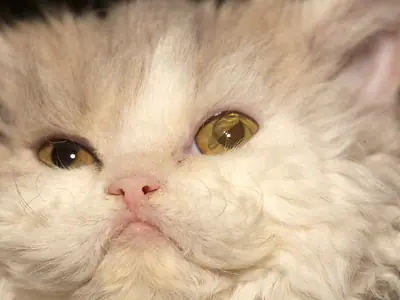
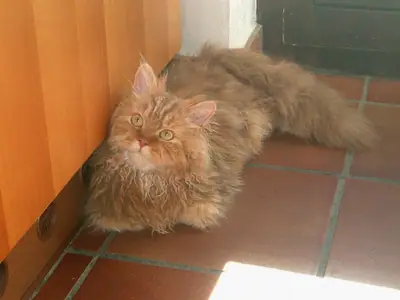
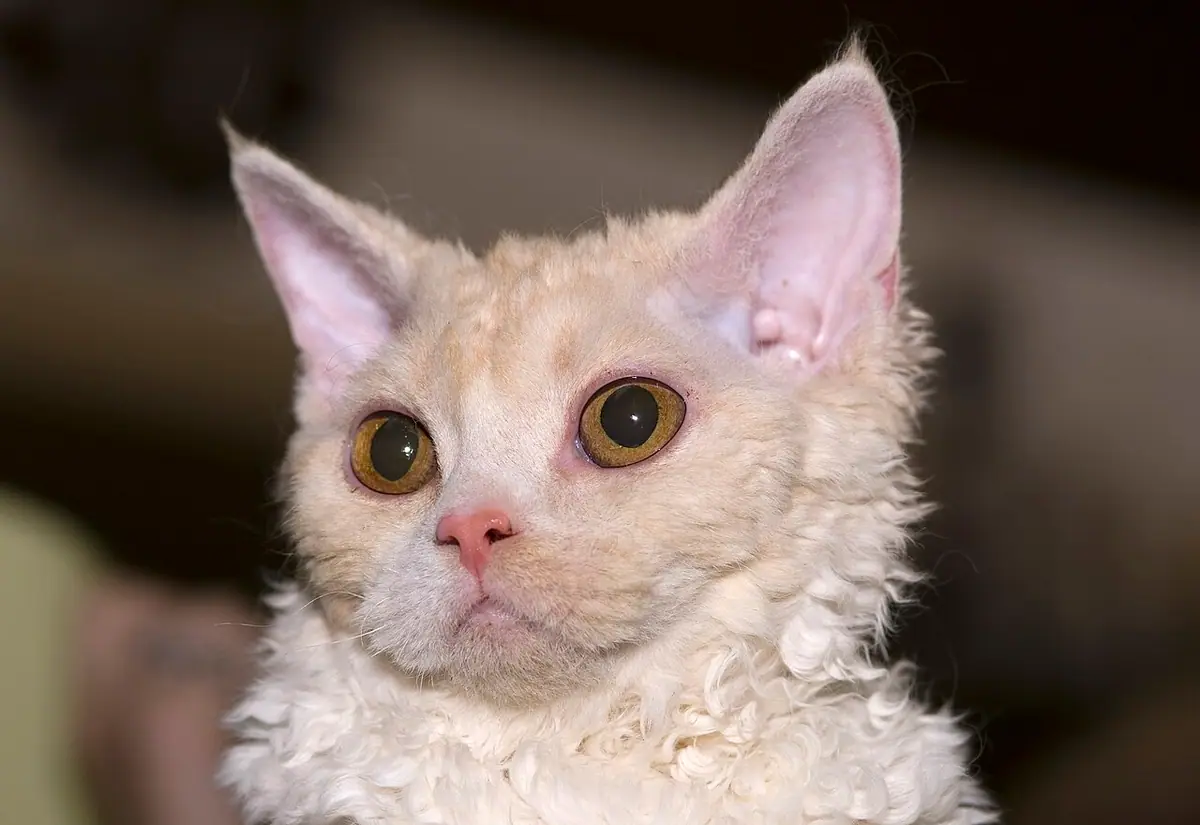
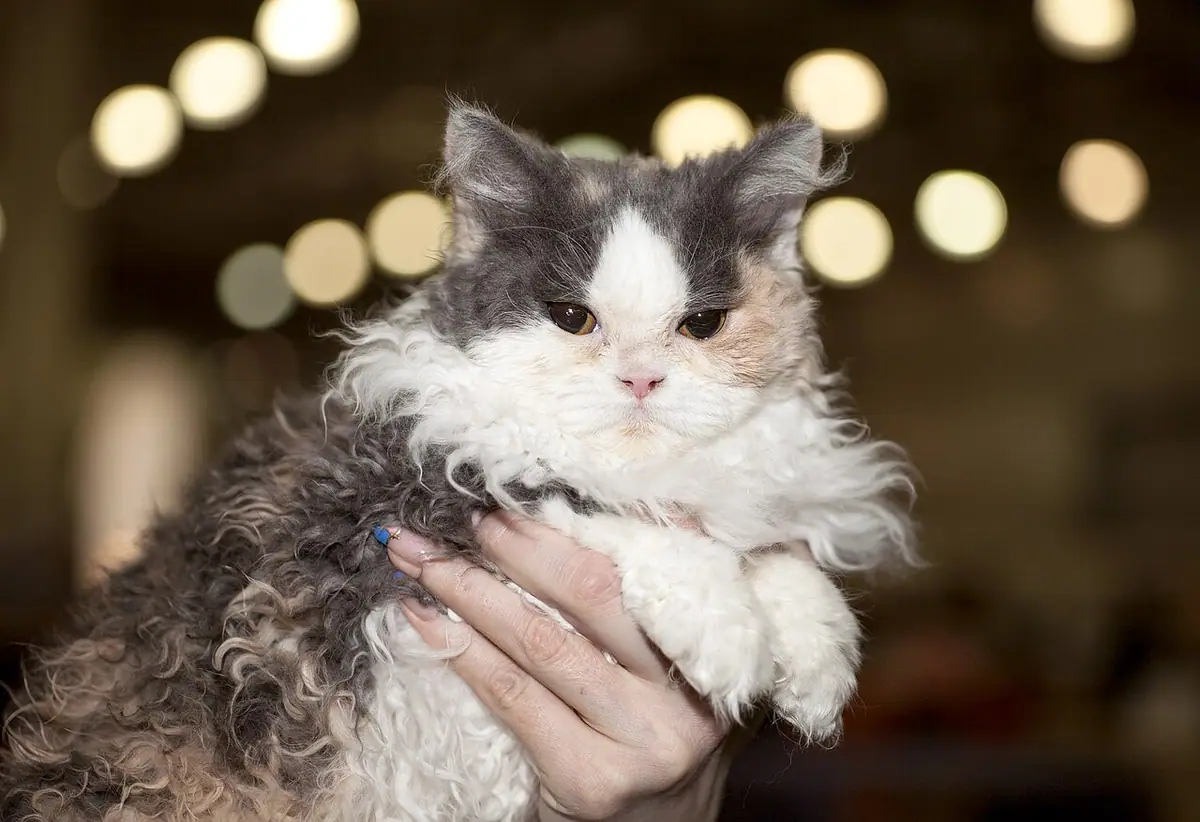
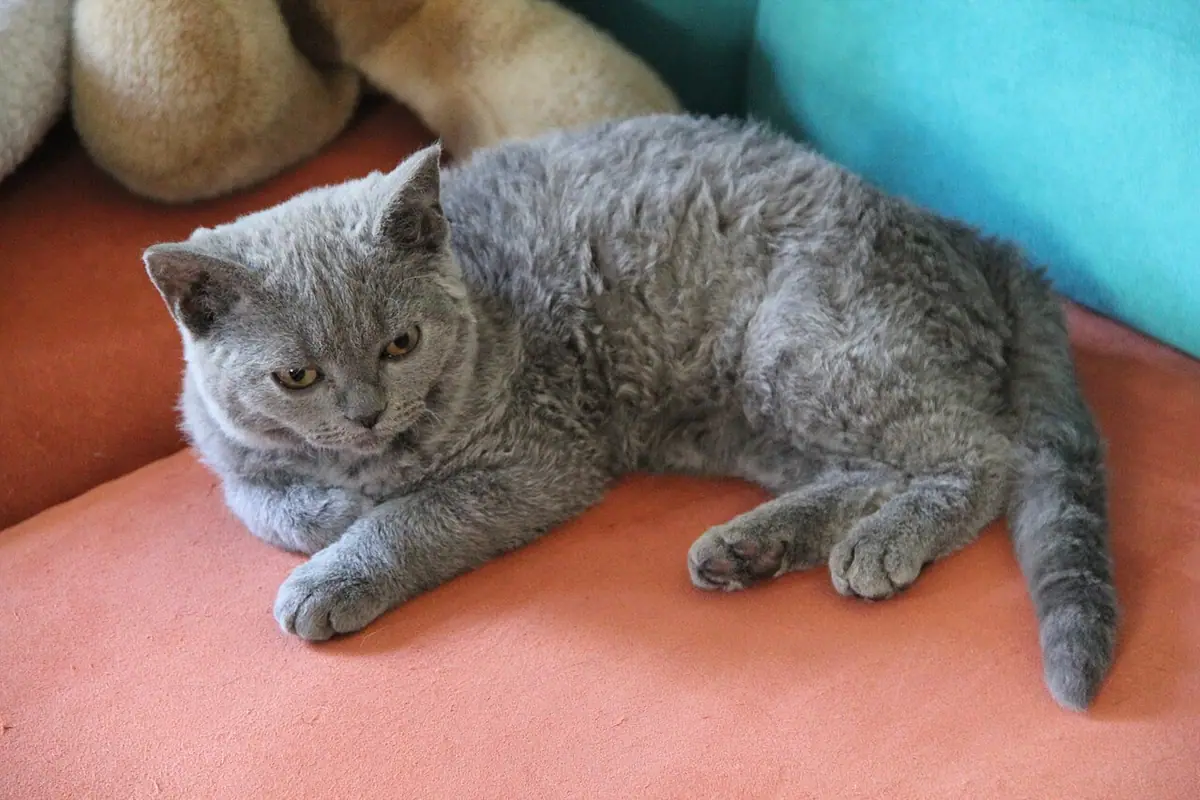
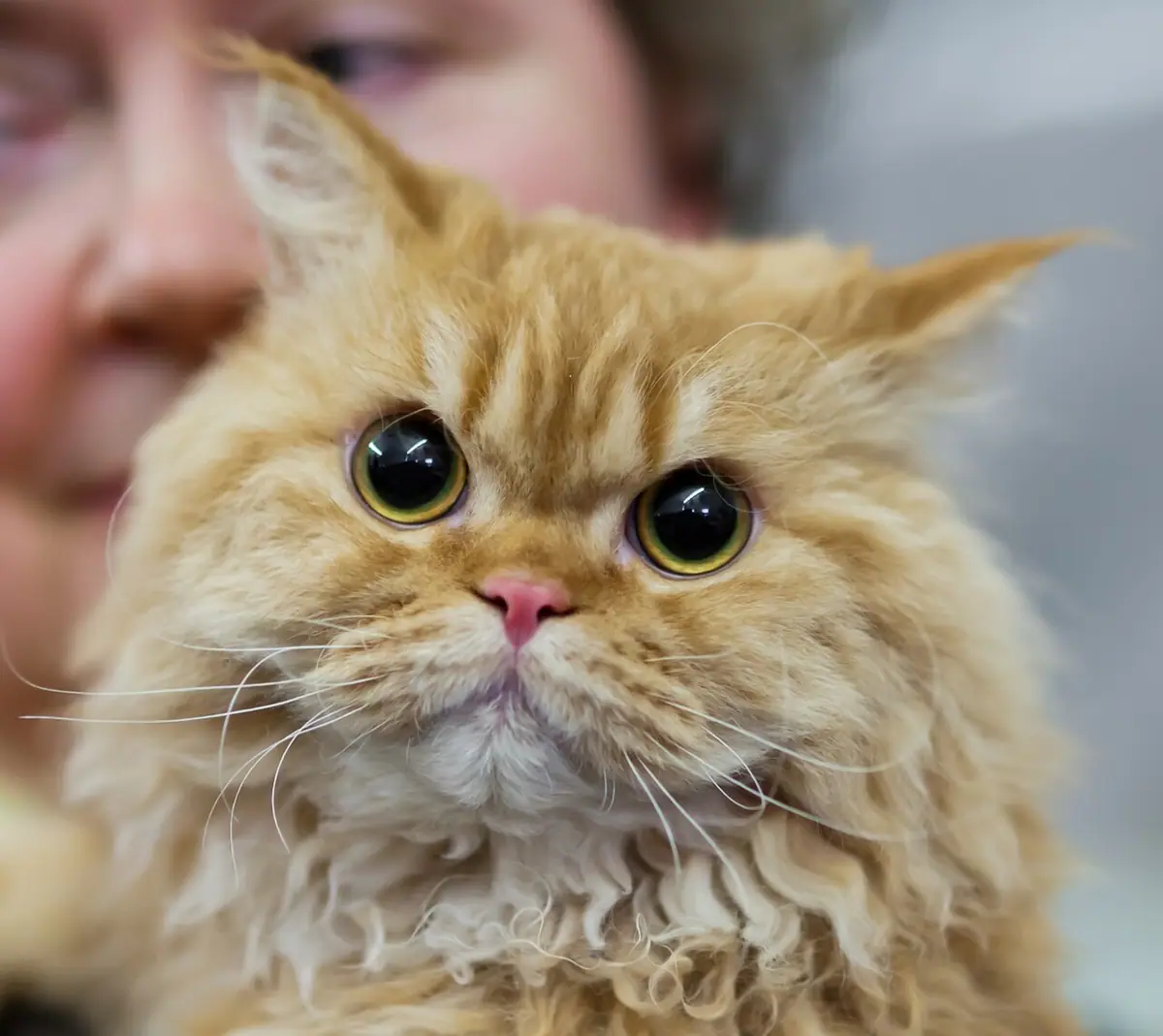
- Coat: well-defined individual curls, short and slightly crisp or long and loose, unlike the Cornish Rex's tight marcel wave or the Devon's soft waves [1]. The curls are most prominent on the neck, tail, flanks and underside [2].
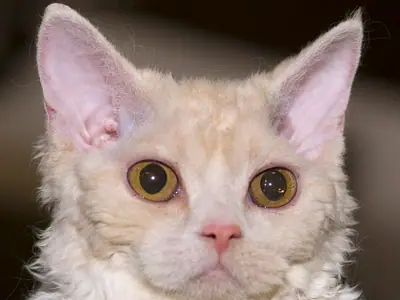
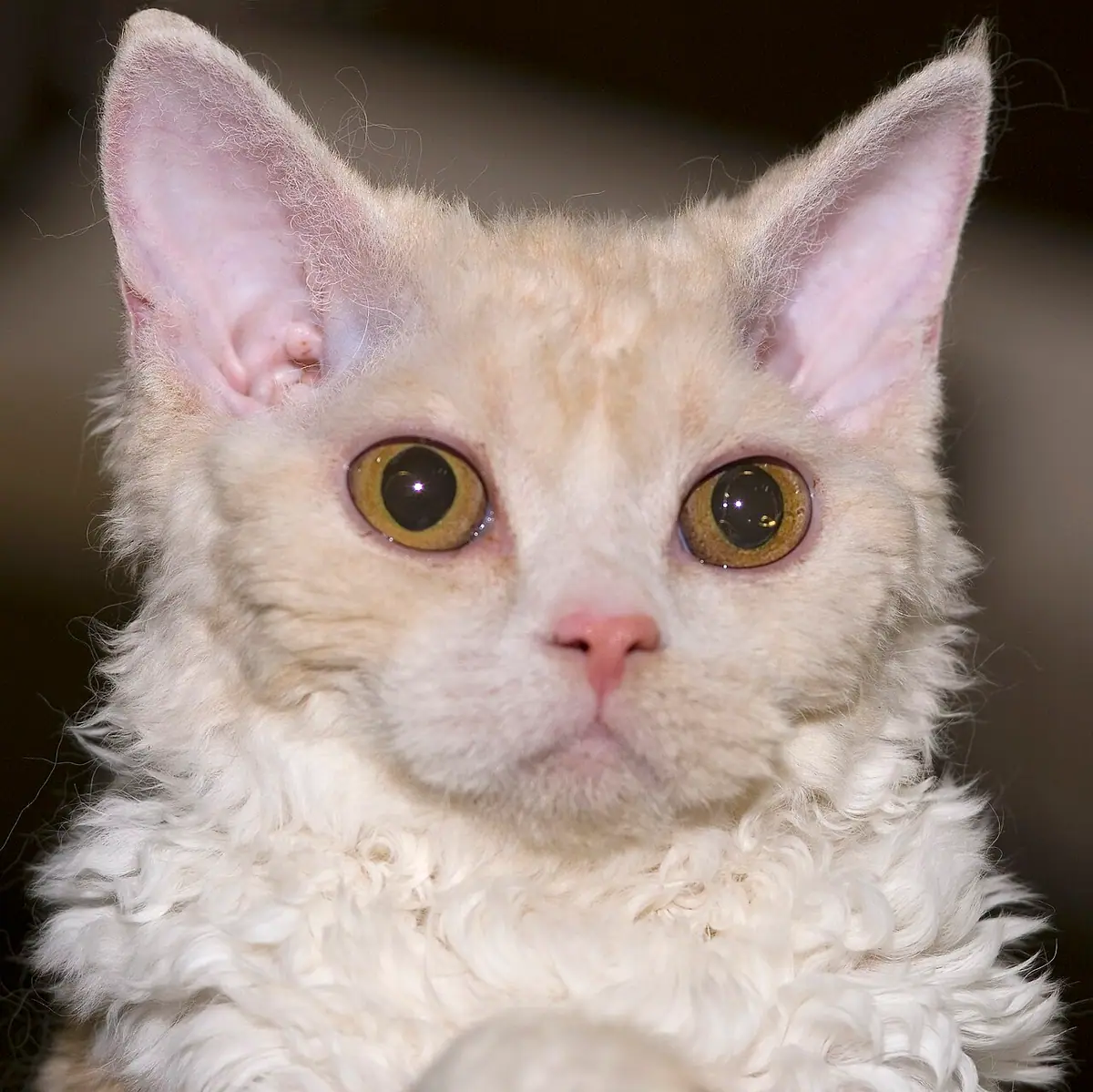
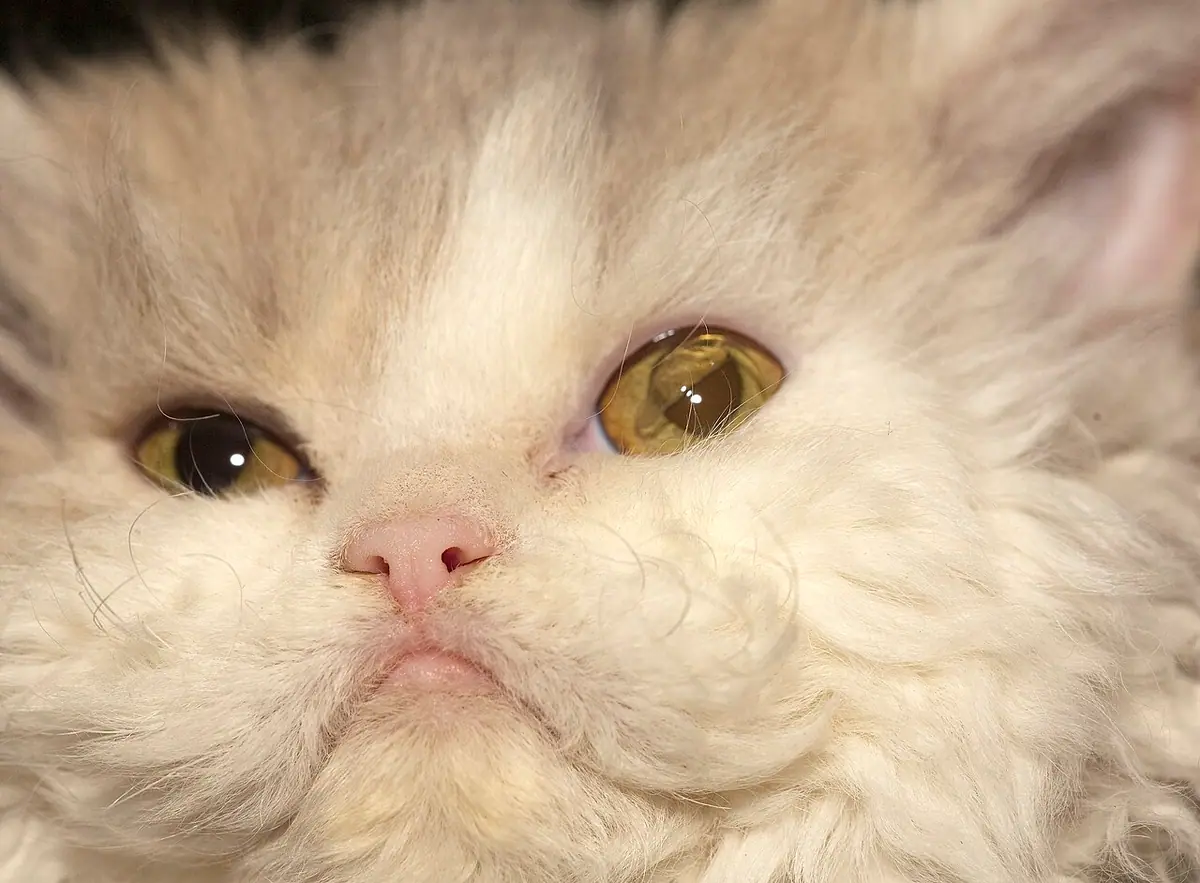
- Whiskers and eyebrows: curly and fragile [1][2].
- Head: round and full-cheeked, with prominent whisker pads that make the muzzle look square; round eyes set well apart [1].
- Body: medium to large, muscular and heavy-boned [1]. Adult males weigh 12–15 lb [1].
- Two coat lengths: shorthairs have the same length all over; longhairs have face-framing ruffs and plumy tails [1].
Photo gallery
7 photos · tap to enlarge- (enlarge, photo 1/7)
- (enlarge, photo 2/7)
- (enlarge, photo 3/7)
- (enlarge, photo 4/7)
- (enlarge, photo 5/7)
- (enlarge, photo 6/7)

- (enlarge, photo 7/7)
.jpg)
Photos: Wikimedia Commons - author & licence shown when enlarged and on the Photo credits page.
Temperament
CFA notes that Miss DePesto earned her name by pestering for attention, and her descendants often do the same: politely asking for your time, then jumping into a lap if their needs aren't soon met [1]. Selkirks are more interactive than active, and their idea of heaven is a warm lap [1]. They're not especially vocal but will "talk" back if you start a conversation [1]. They do well with children and other animals, as long as children handle them gently [1][2]. TICA notes they are very social and dislike being left alone for long periods [2].
Care
- Coat: CFA suggests combing once or twice a month [1]; TICA suggests a couple of times a week [2]. Fluff the curls with gentle finger-scratching [1][2].
- Bathing: rarely needed; let the coat air-dry somewhere warm, as blow-drying gives a poodle look [2].
- Basics: trim nails, clean ears and brush teeth regularly [2].
Health
- Generally healthy: CFA says the breed has no breed-specific health concerns [1].
- Parent-breed conditions: breeders typically screen for polycystic kidney disease (PKD (Polycystic kidney disease): Inherited kidney disease where fluid-filled cysts grow in the kidneys; a gene test exists. All terms ), hip dysplasia and hypertrophic cardiomyopathy (HCM (Hypertrophic cardiomyopathy): A heart disease where the heart wall thickens; the most common heart disease in cats. All terms ), because British Shorthairs and Exotics are allowable outcrosses [1].
- Blood type: incompatibility can occur, so breeders usually test blood type before mating [1].
- Lifespan: GCCF estimates about 15 years [3] and TICA 10–15+ years [2]. These are registry estimates; we found no breed-specific study.
Ask breeders for the parents' PKD and HCM screening results, and talk to your vet about any specific concern.
Don't confuse with…
- Devon Rex: soft waves and very large ears [5].
- Cornish Rex: a tight, close-lying wave on a slender body [6].
- LaPerm: also curly, but with a modified-wedge head [7].
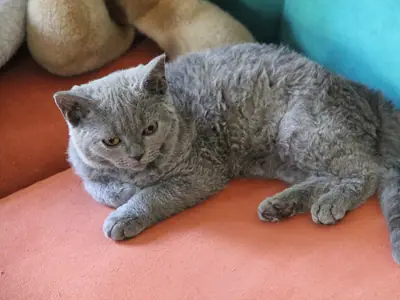
- British Shorthair: a similarly sturdy build, but straight-coated [8].
Ask your vet. This information is for reference only and does not replace a veterinary diagnosis.
Cat facts
Frequently asked questions
How is the Selkirk Rex different from the Devon and Cornish Rex?
According to CFA (Cat Fanciers' Association): The world's largest registry of pedigree cats, based in the US. It keeps pedigree records, writes breed standards and runs cat shows. All terms , the Cornish has a tight marcel wave and the Devon soft waves, while the Selkirk has well-defined individual curls, short and slightly crisp or long and loose [1]. The Selkirk is also larger, sturdier and rounder-headed [1]. Unlike the Cornish and Devon genes, the Selkirk curl gene is Dominant gene: One copy from either parent is enough for the trait to show. All terms [2].
Does a Selkirk Rex need a lot of grooming?
Advice varies: CFA says combing once or twice a month is enough [1], while TICA (The International Cat Association): An international cat registry based in the US and one of the largest. It often recognizes newer breeds before CFA does. All terms suggests combing a couple of times a week to prevent tangles [2]. Blow-drying gives a poodle look [2]; fluff the curls gently with your fingers instead [1].
Do Selkirk Rex cats shed?
Yes. TICA says Selkirks do shed, so regular combing to remove dead hair is recommended [2].
Similar breeds

Breed photos: Wikimedia Commons (CC0 / CC BY / CC BY-SA) - authors & licences on the Photo credits page.
References
- CFA, Selkirk Rex (breed profile & standard)
- TICA, Selkirk Rex (breed profile)
- GCCF, Cat Breeds (Selkirk Rex breed card)
- FIFe, Breeds (SRL/SRS Selkirk Rex Longhair/Shorthair, fully recognised)
- CFA, Devon Rex (breed profile & standard)
- CFA, Cornish Rex (breed profile & standard)
- CFA, LaPerm (breed profile)
- CFA, British Shorthair (breed profile & standard)
Accessed: 2026-10-02
CFA, TICA, FIFe and GCCF are the major cat registries in the US, Europe and the UK. See the glossary
Written by Catopedia from the sources above. Photos credit their author and licence under each image and on the Photo credits & licences.