Cat breed · Turkey
Turkish Angora
Mèo Angora Thổ Nhĩ Kỳ

CFA (Cat Fanciers' Association): The world's largest registry of pedigree cats, based in the US. It keeps pedigree records, writes breed standards and runs cat shows. All terms describes the Turkish Angora as the oldest known longhair breed, likely an ancestor of other longhairs, and a national treasure in its homeland [1]. It's elegant, long-bodied and big-eared, with a remarkably soft, silky coat [1]. It looks delicate but has real strength and a very strong will [1]. The breed is recognised by CFA and FIFe (Fédération Internationale Féline): The International Feline Federation, an umbrella body of cat clubs, mostly in Europe. All terms [2].
Contents (10 sections)
Quick facts
- Origin
- Turkey; brought to Europe in the 1600s
- Weight
- ~2.3–4.5 kg
- Lifespan
- ~15–20 years
- Coat
- single, silky
- Energy
- high
Details & sources
- Size
- Small to medium, with a long body and legs [1]
- Weight
- TICA (The International Cat Association): An international cat registry based in the US and one of the largest. It often recognizes newer breeds before CFA does. All terms gives about 2.3–4.5 kg (5–10 lb) [7]
- Lifespan
- VCA estimates 15–20 years [8]
- Coat
- Single, very soft and silky coat that resists matting [1]
Traits (scale 1–5)
- Energy
- 5/5
- Shedding
- 2/5
- Grooming needs
- 2/5
- Good with kids
- 5/5
- Vocal
- 3/5
- Independence
- 3/5
Basis: Editorial estimate based on CFA (Cat Fanciers' Association): The world's largest registry of pedigree cats, based in the US. It keeps pedigree records, writes breed standards and runs cat shows. All terms 's description, not a measurement
Recognized by major cat registries
Cat registries keep pedigree records and set the standard for each breed. Tap an abbreviation to see what it means.
| CFA (Cat Fanciers' Association): The world's largest registry of pedigree cats, based in the US. It keeps pedigree records, writes breed standards and runs cat shows. All terms US | Yes |
|---|---|
| TICA (The International Cat Association): An international cat registry based in the US and one of the largest. It often recognizes newer breeds before CFA does. All terms international, US-based | - |
| FIFe (Fédération Internationale Féline): The International Feline Federation, an umbrella body of cat clubs, mostly in Europe. All terms Europe | Yes |
| GCCF (Governing Council of the Cat Fancy): The UK's oldest pedigree cat registry (since 1910). All terms UK | - |
GCCF (Governing Council of the Cat Fancy): The UK's oldest pedigree cat registry (since 1910). All terms : pending verification.
History
The breed's written history goes back to the 1600s, when Angoras were brought to Europe from the Middle East [1]. They were popular in France and are believed to have been among Marie Antoinette's pets [1]. As the cat fancy grew in England, they were crossed so heavily with Persians that the breed nearly vanished [1]. In the 1930s the Turkish government set up preservation programmes in zoos, where only white cats were considered authentic [1]. The first Turkish Angoras reached the US in 1954 [1].
Appearance
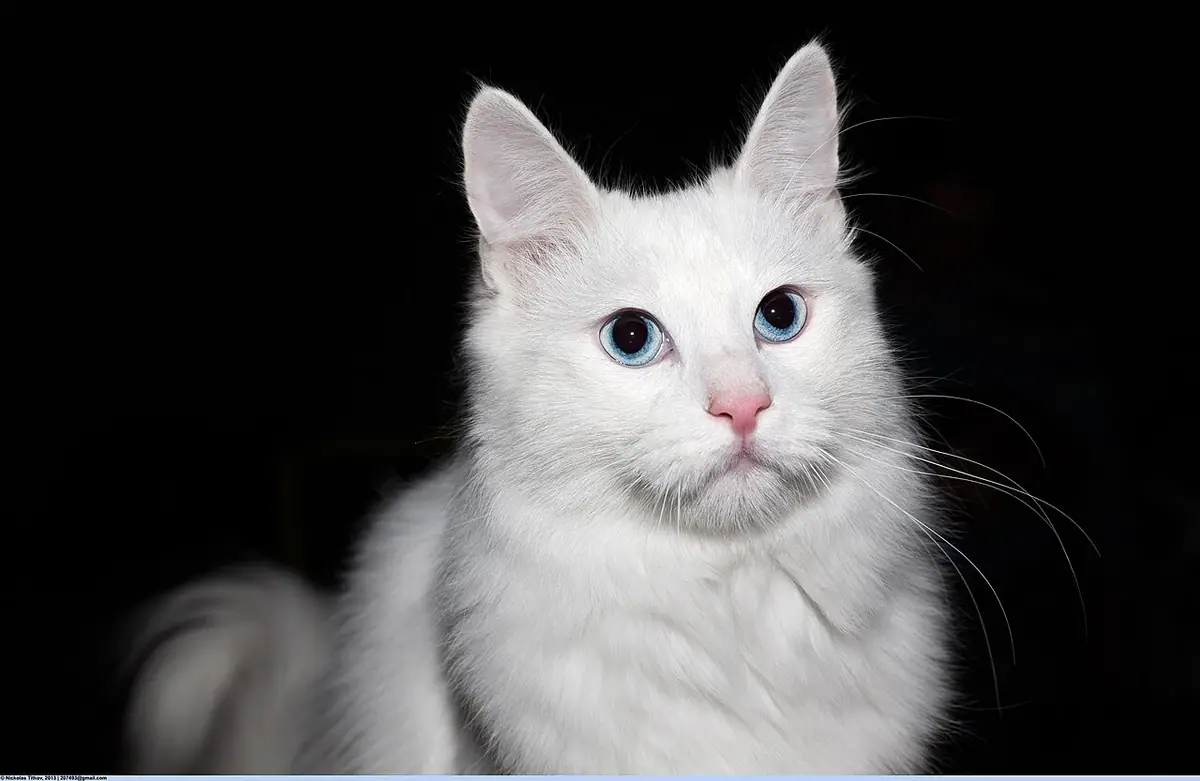
- Body: small to medium, long-bodied with matching long legs and a richly plumed tail [1].
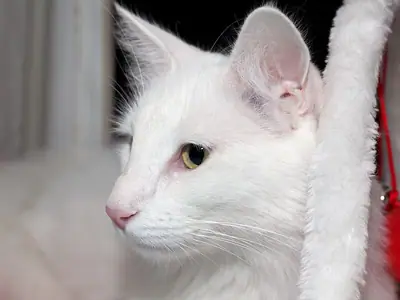
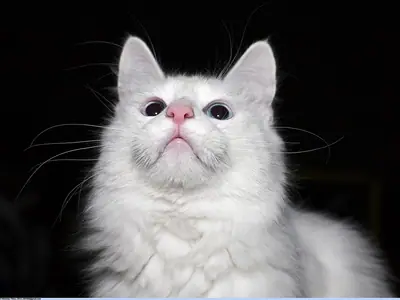
- Head: a medium-long wedge; extra-large, upright ears set high give a "bunny rabbit" look [1].
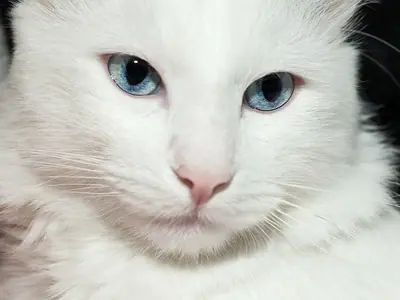
- Eyes: almond-shaped, in blue, green, amber or copper; odd eyes are common and prized [1].
- Coat: single, very soft and silky [1].
- Colours: almost any, except chocolate, lilac and pointed [1].
Photo gallery
7 photos · tap to enlarge- (enlarge, photo 1/7)
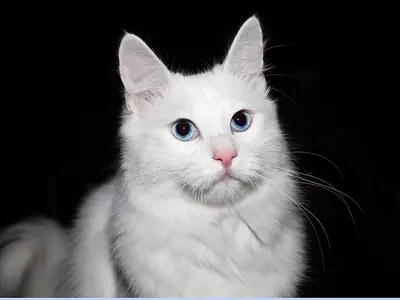
- (enlarge, photo 2/7)
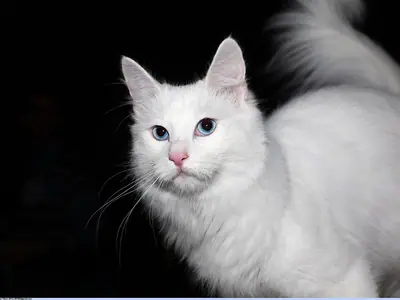
- (enlarge, photo 3/7)
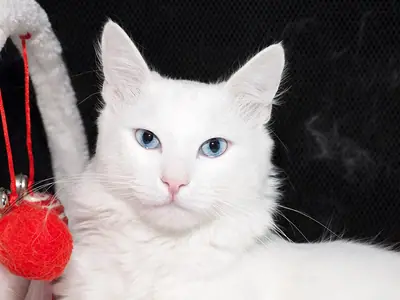
- (enlarge, photo 4/7)
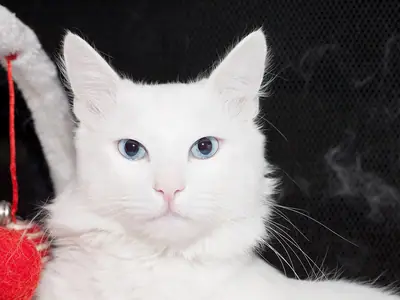
- (enlarge, photo 5/7)
- (enlarge, photo 6/7)
- (enlarge, photo 7/7)
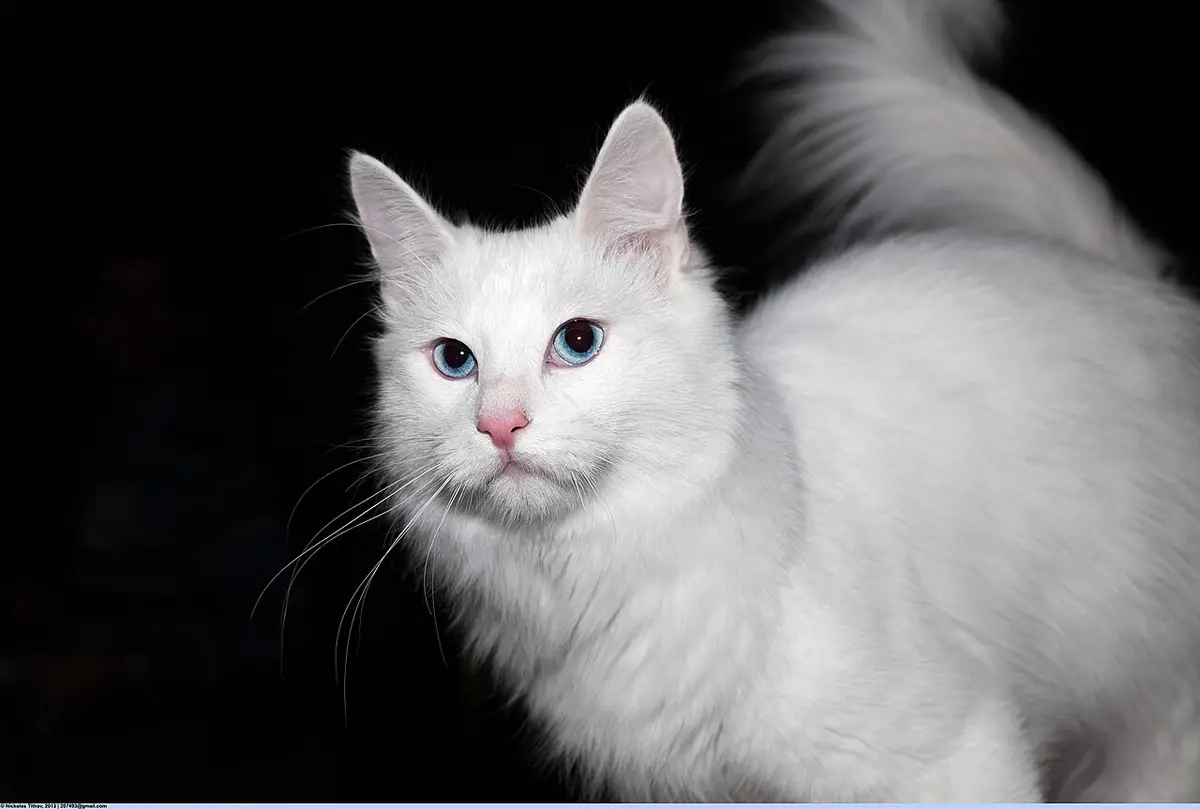
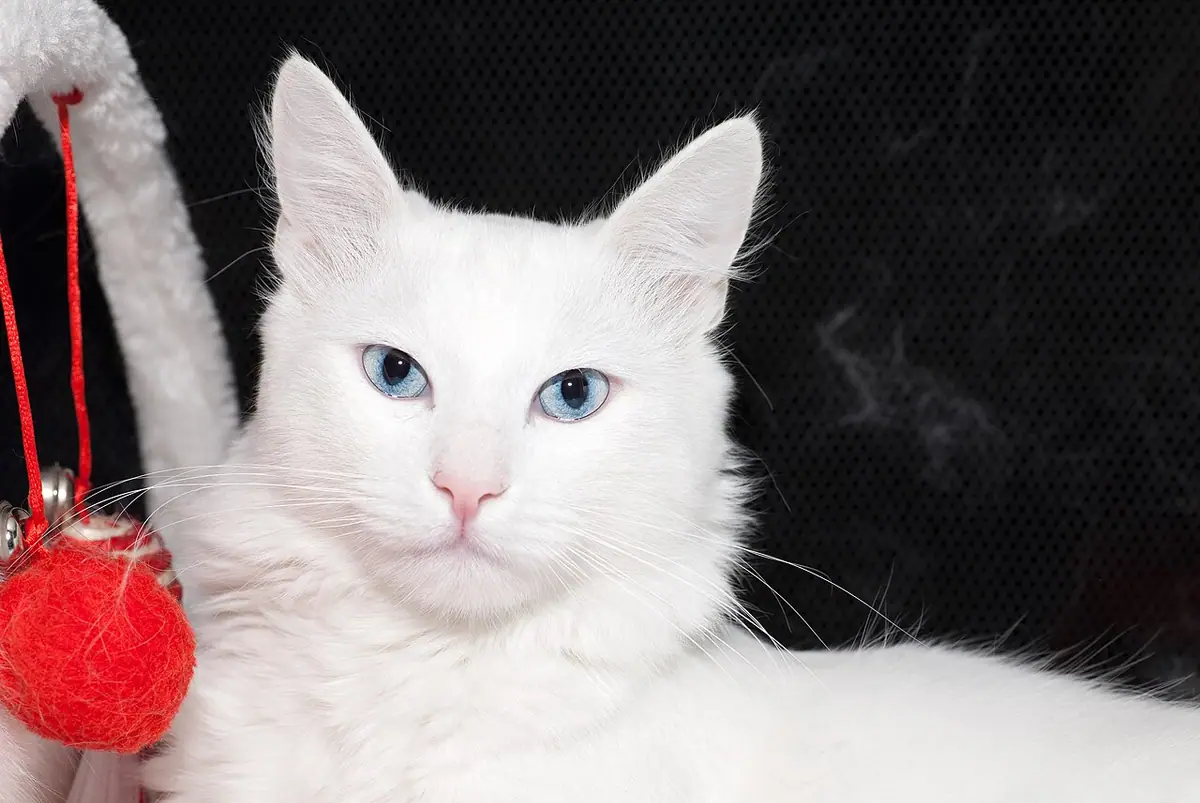
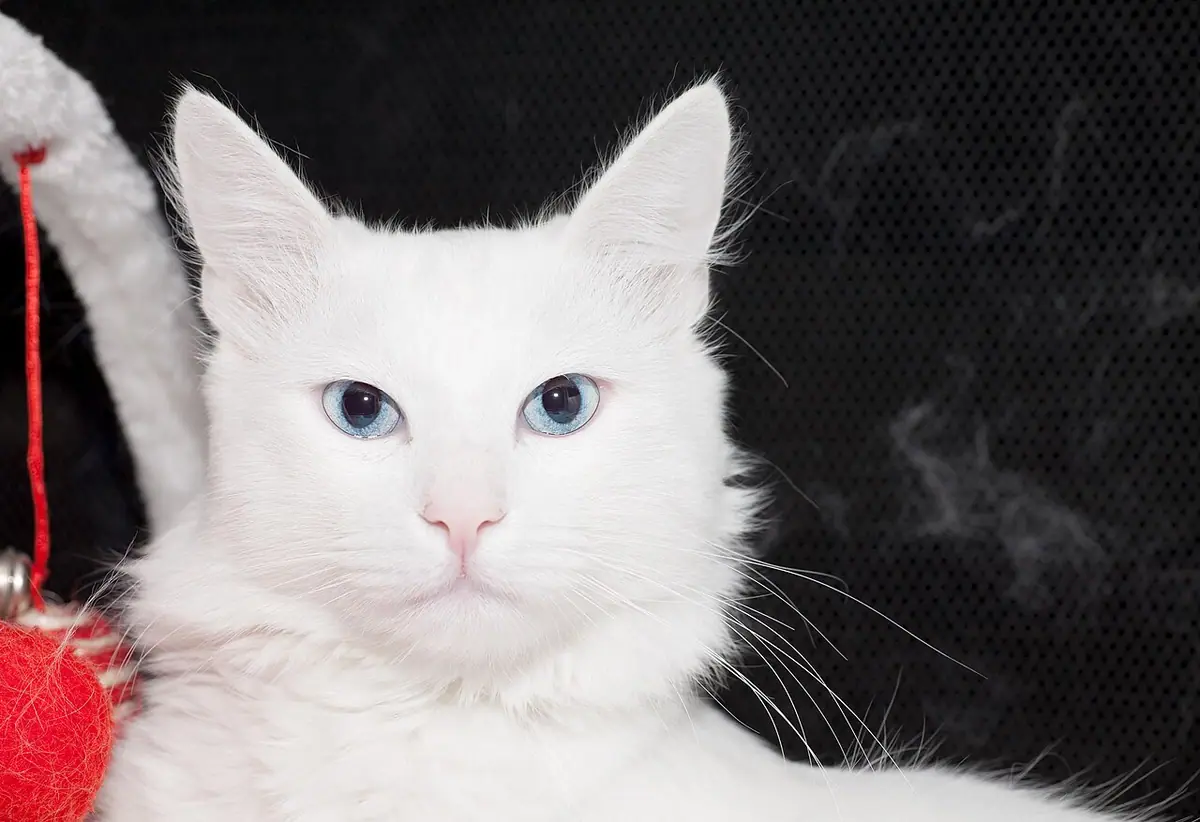
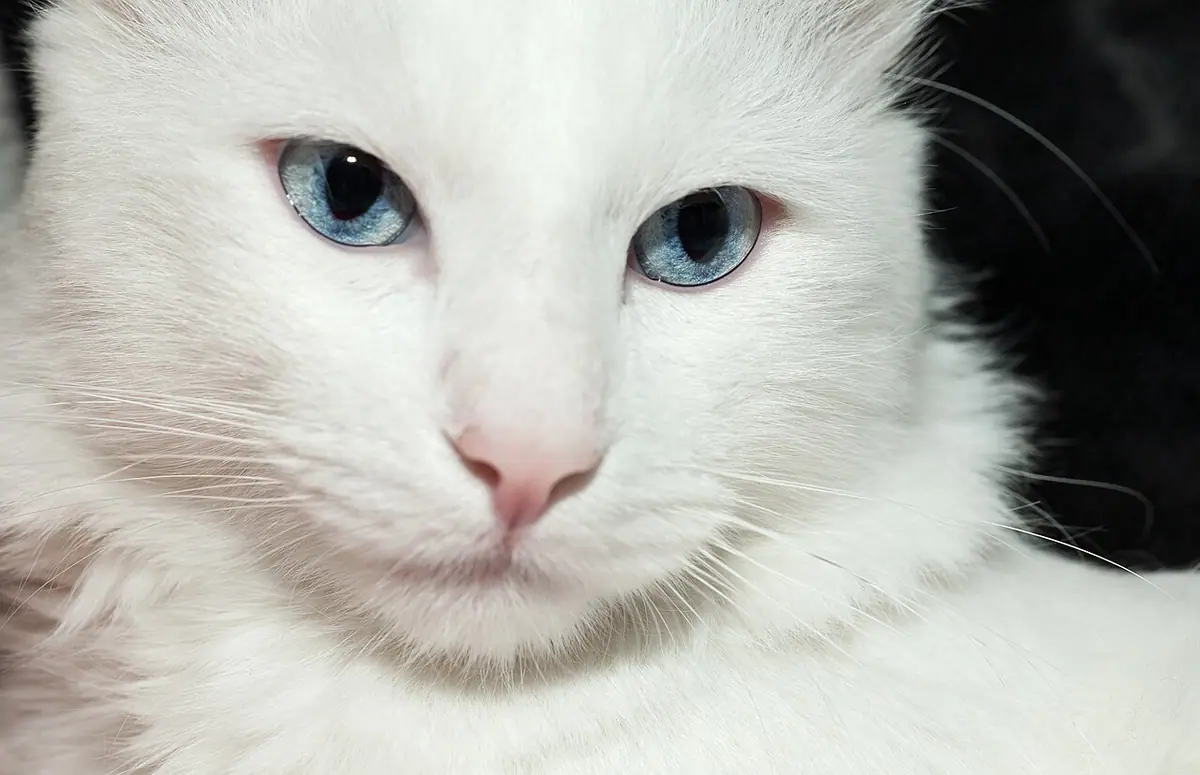
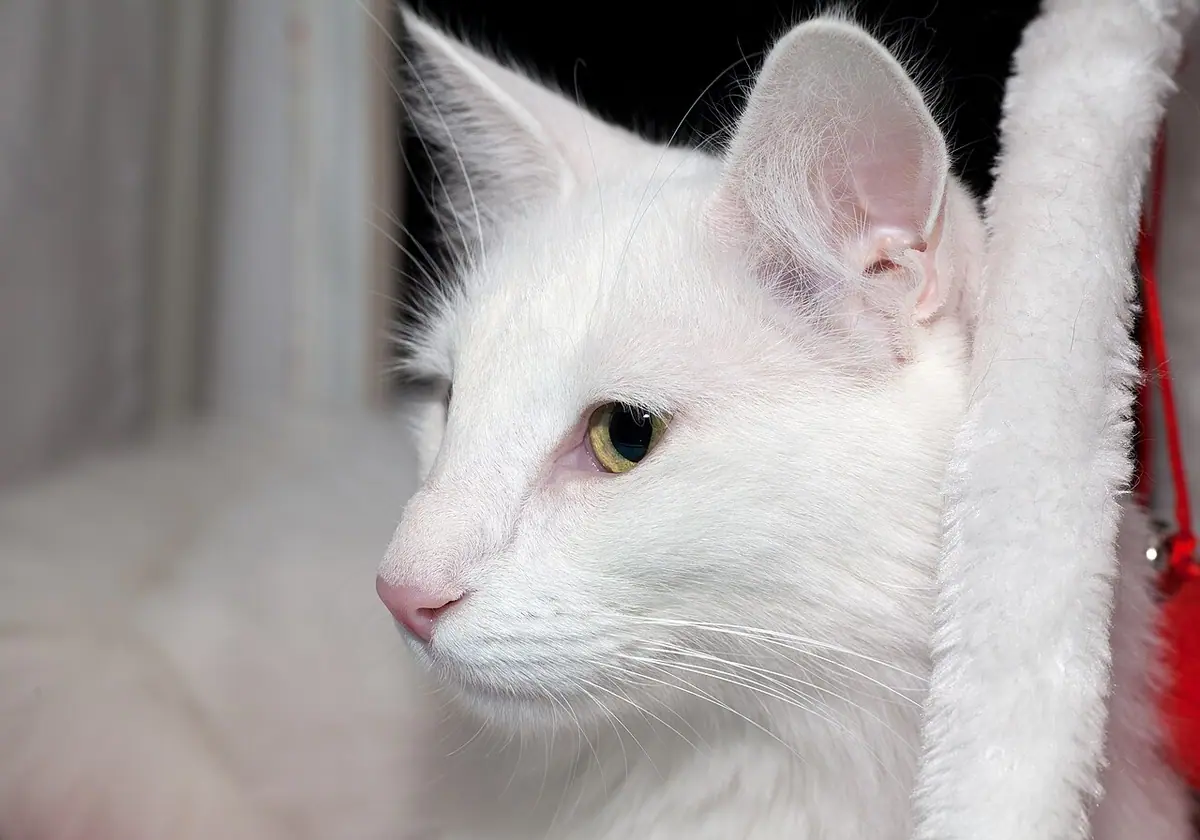
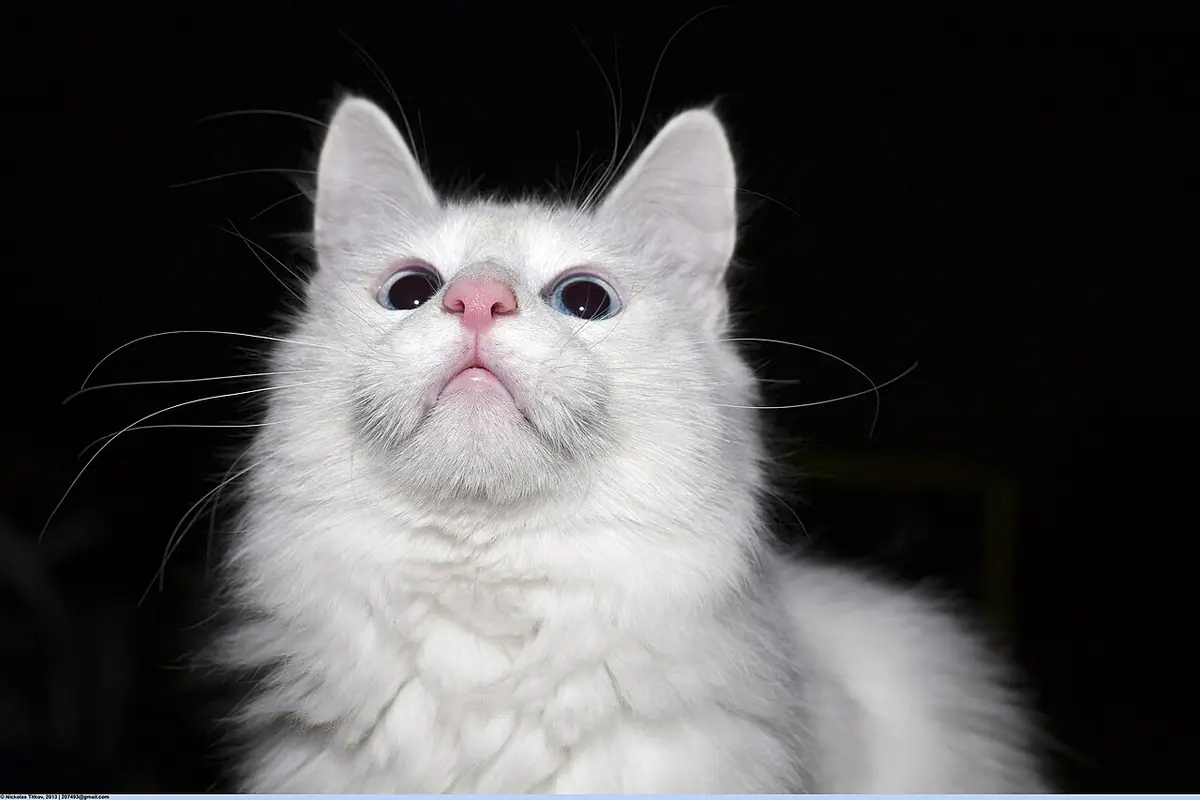
.jpg)
Photos: Wikimedia Commons - author & licence shown when enlarged and on the Photo credits page.
Temperament
Intelligence varies widely, from "Einsteins" to cats who forget where the food bowl is [1]. Either way, Turks are among the most interactive and affectionate breeds [1]. They want to be your constant companion and enthusiastic assistant [1]. They're independent enough to stay home while you're out, then meet you at the door to tell you all about their day [1]. Loving and tolerant of handling, they're wonderful with young children [1]. They love heights and will try to chase a laser dot up the wall [1].
Care
Health
- Breed-specific issues: CFA says none are known [1].
- Deafness in white cats: white cats, especially blue-eyed ones, can be prone to deafness [1]. iCatCare (International Cat Care): A UK charity dedicated to cat health and welfare. All terms says white cats with two blue eyes are 3–5 times more likely to be congenitally deaf than white cats without blue eyes, and those with one blue eye about twice as likely [3].
- BAER (Brainstem auditory evoked response): A quick, painless test that measures the brain’s response to sound to check whether a cat can hear. All terms testing: a non-invasive hearing test that accurately shows whether a cat is deaf [3]. Breeders should pair white cats with coloured cats [1].
- Lifespan: VCA estimates 15–20 years [8].
If you're worried about a white cat's hearing, talk to your vet.
Don't confuse with…
- White Persian: stocky, with a round head and short nose [4].
- Turkish Van: larger and more robust, white with colour mainly on head and tail [5].
- Khao Manee: white but shorthaired, from Thailand [6].
Ask your vet. This information is for reference only and does not replace a veterinary diagnosis.
Cat facts
Frequently asked questions
Are Turkish Angoras always white?
No. White is traditional, and when the first Angoras reached the US in 1954 the breed was considered all-white. Today they come in almost every colour except chocolate, lilac and the pointed pattern [1].
Are white Turkish Angoras deaf?
Not all, but white cats, especially blue-eyed ones, are more prone to deafness [1][3]. Breeders should pair white cats with coloured ones, and in some places white kittens must have a BAER (Brainstem auditory evoked response): A quick, painless test that measures the brain’s response to sound to check whether a cat can hear. All terms hearing test [1].
Is every white longhair an Angora?
No. The Turkish Angora is a Pedigree: A record of a pedigree cat's ancestors over several generations, issued by a registry. All terms breed with a long, slender body, a wedge head and very large upright ears [1]. Other white longhairs, such as white Persians, look very different [4].
Similar breeds


Breed photos: Wikimedia Commons (CC0 / CC BY / CC BY-SA) - authors & licences on the Photo credits page.
References
- CFA, Turkish Angora (breed profile & standard)
- FIFe, Breeds (TUA Turkish Angora, fully recognised)
- International Cat Care, Inherited deafness in white cats
- CFA, Persian (breed profile & standard)
- CFA, Turkish Van (breed profile)
- CFA, Khao Manee (breed profile)
- TICA, Turkish Angora (breed profile)
- VCA Animal Hospitals, Turkish Angora (cat breed profile)
Accessed: 2026-10-02
CFA, TICA, FIFe and GCCF are the major cat registries in the US, Europe and the UK. See the glossary
Written by Catopedia from the sources above. Photos credit their author and licence under each image and on the Photo credits & licences.