Cat breed · Myanmar
Burmese
Mèo Miến Điện (Burmese)

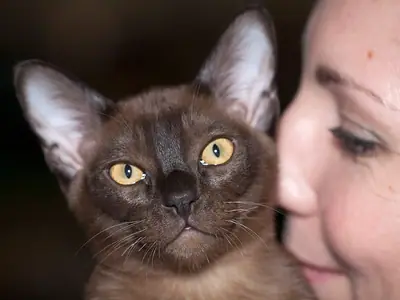
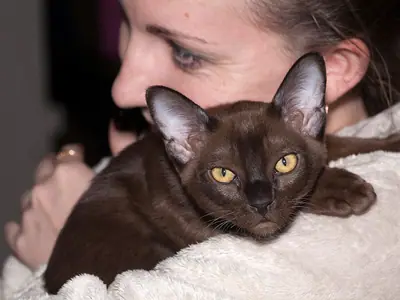
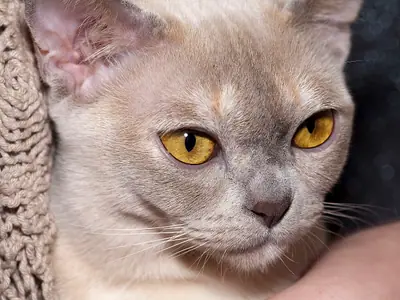
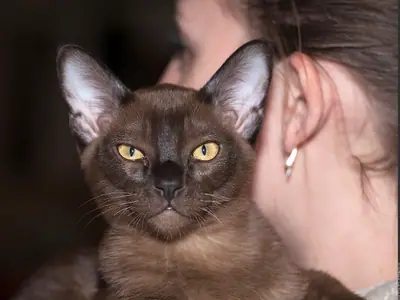
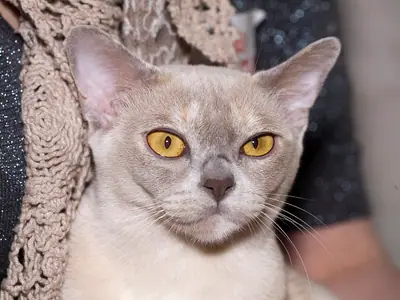
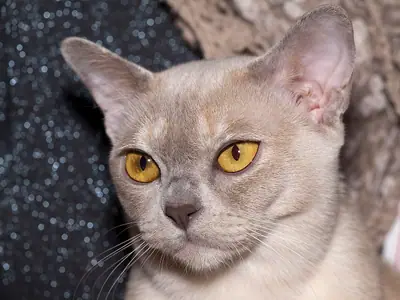
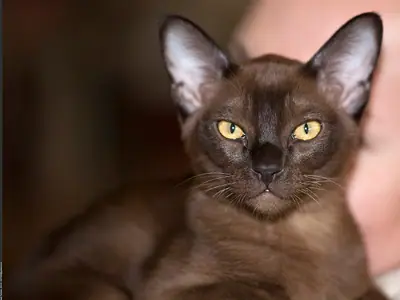
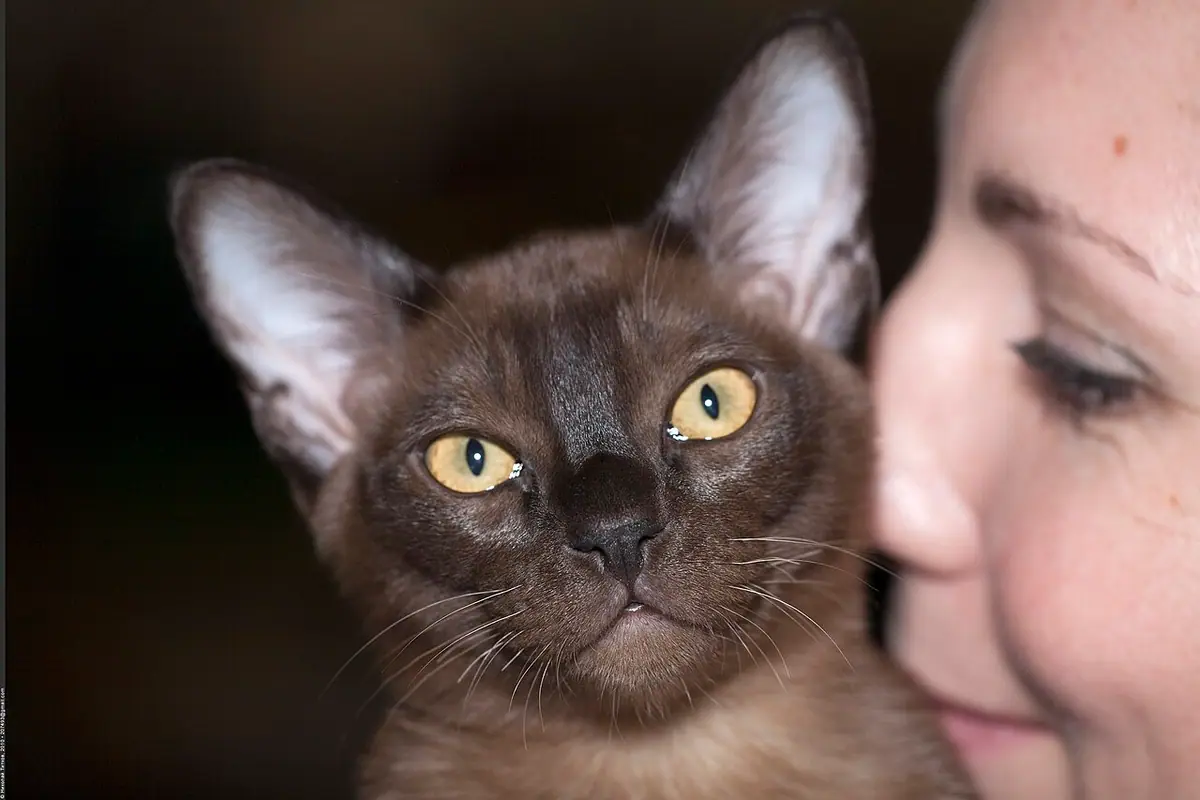
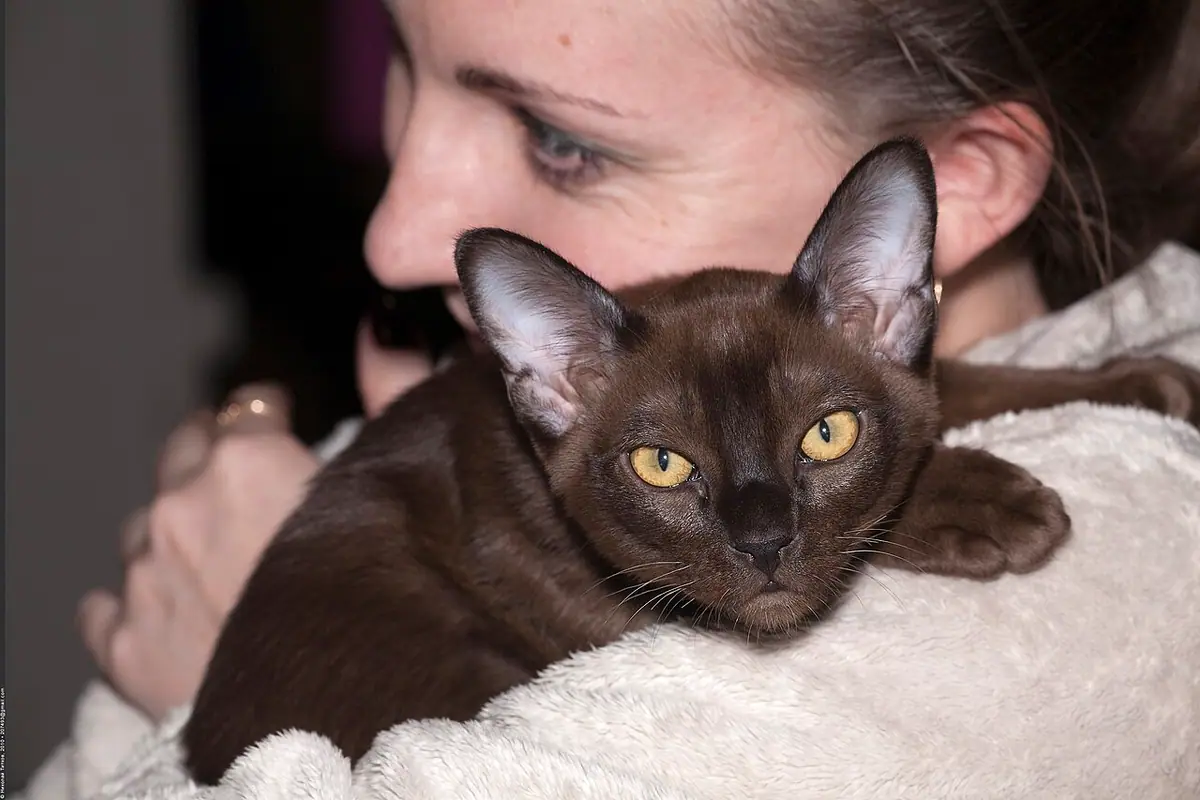
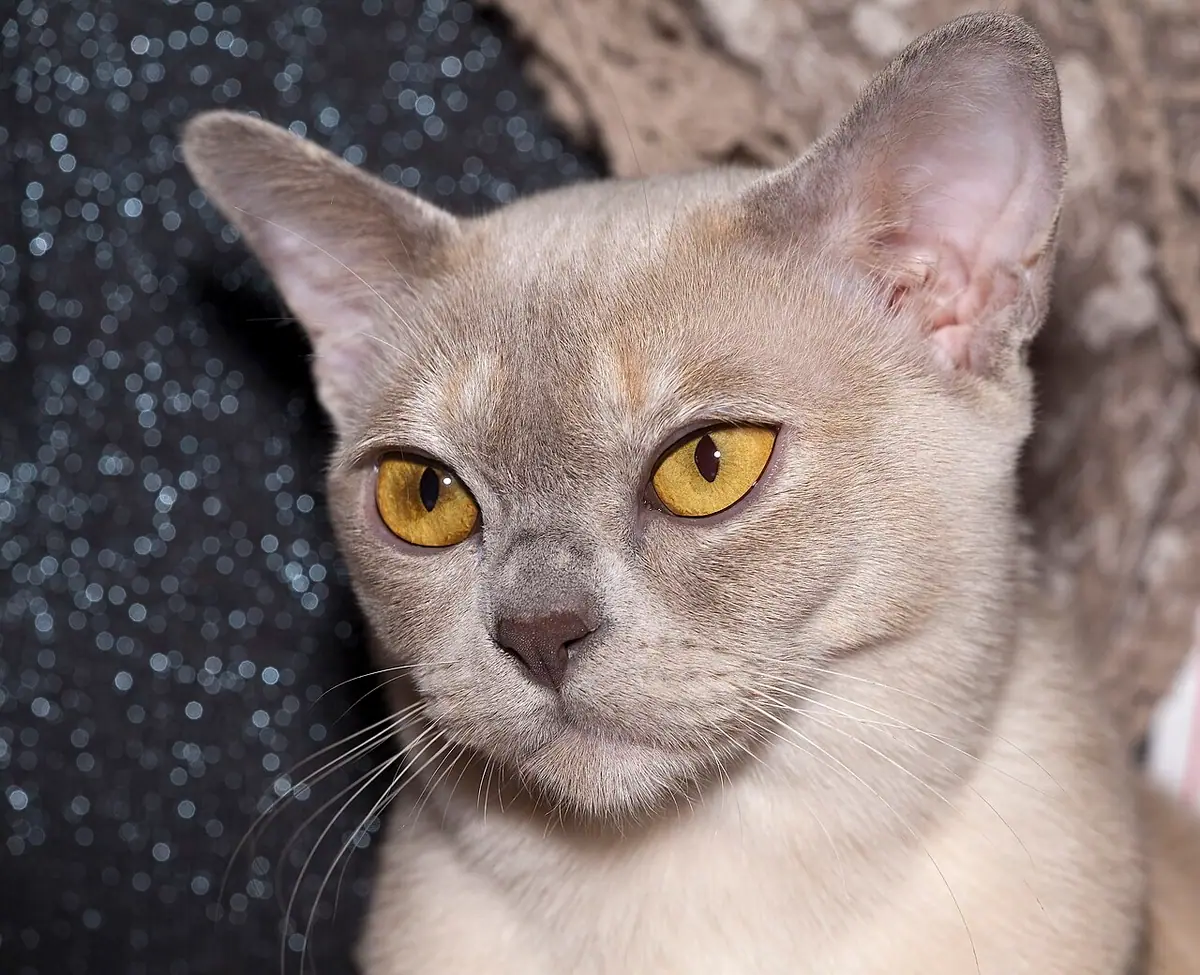
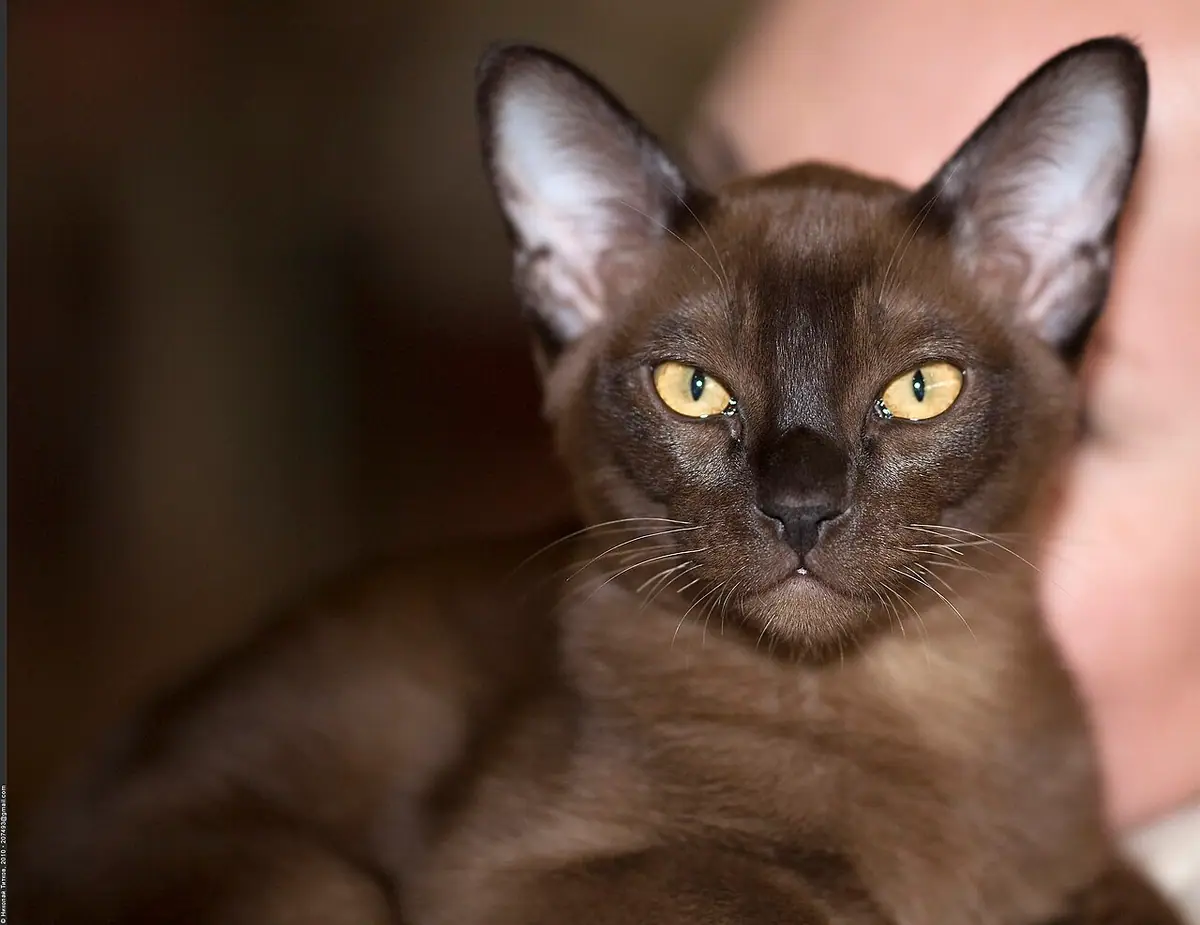
The Burmese is round and compact, with a very short, satin-glossy coat and glowing golden eyes [1]. It doesn't look big, but it's surprisingly heavy and muscular when you pick it up [1]. Burmese are so physically attached to their people that they're nicknamed "Velcro kitties" [1]. Don't confuse it with the Birman, an entirely different longhaired breed [7]. The Burmese is recognised by CFA (Cat Fanciers' Association): The world's largest registry of pedigree cats, based in the US. It keeps pedigree records, writes breed standards and runs cat shows. All terms , TICA (The International Cat Association): An international cat registry based in the US and one of the largest. It often recognizes newer breeds before CFA does. All terms [11], FIFe (Fédération Internationale Féline): The International Feline Federation, an umbrella body of cat clubs, mostly in Europe. All terms [10] and GCCF (Governing Council of the Cat Fancy): The UK's oldest pedigree cat registry (since 1910). All terms [12].
Contents (10 sections)
Quick facts
- Origin
- Malay Peninsula (natural); developed in the US from 1930
- Weight
- ~3.6–5.4 kg
- Lifespan
- ~10–16 years
- Coat
- very short, glossy
- Energy
- high
Details & sources
- Size
- Medium, solid, heavier than it looks [1]
- Weight
- Purina UK gives about 3.6–5.4 kg [13]; mature males may reach or exceed 12 lb (5.4 kg); females are usually smaller [1]
- Lifespan
- Purina UK estimates 10–16 years [13]; Median: The middle value: half the cats lived shorter than this, half lived longer. All terms 14.3 years (31 cats, UK) [3]; life expectancy about 14.4 years in a 2024 UK study [4]
- Coat
- Very short, fine, glossy and satin-like, close-lying [1]
Traits (scale 1–5)
- Energy
- 4/5
- Shedding
- 1/5
- Grooming needs
- 1/5
- Good with kids
- 5/5
- Vocal
- 2/5
- Independence
- 1/5
Basis: Editorial estimate based on CFA (Cat Fanciers' Association): The world's largest registry of pedigree cats, based in the US. It keeps pedigree records, writes breed standards and runs cat shows. All terms 's description, not a measurement
Recognized by major cat registries
Cat registries keep pedigree records and set the standard for each breed. Tap an abbreviation to see what it means.
| CFA (Cat Fanciers' Association): The world's largest registry of pedigree cats, based in the US. It keeps pedigree records, writes breed standards and runs cat shows. All terms US | Yes |
|---|---|
| TICA (The International Cat Association): An international cat registry based in the US and one of the largest. It often recognizes newer breeds before CFA does. All terms international, US-based | Yes |
| FIFe (Fédération Internationale Féline): The International Feline Federation, an umbrella body of cat clubs, mostly in Europe. All terms Europe | Yes |
| GCCF (Governing Council of the Cat Fancy): The UK's oldest pedigree cat registry (since 1910). All terms UK | Yes |
History
Burmese occur naturally on the Malay Peninsula, but most of today's cats trace back to one cat, Wong Mau, brought to America in 1930 [1]. Wong Mau was a small walnut-brown female with darker points. Bred to a Siamese, she produced three types of kittens: Siamese-marked, mother-like, and solid dark brown [1]. The solid brown cats bred true. CFA began registering them in 1936 and granted championship in 1959 [1]. Dilute colours later appeared and, after much controversy, were accepted [1].
Appearance
- Body: medium-sized, with substantial bone, excellent muscle and surprising weight; sometimes compared to a small bulldog [1].
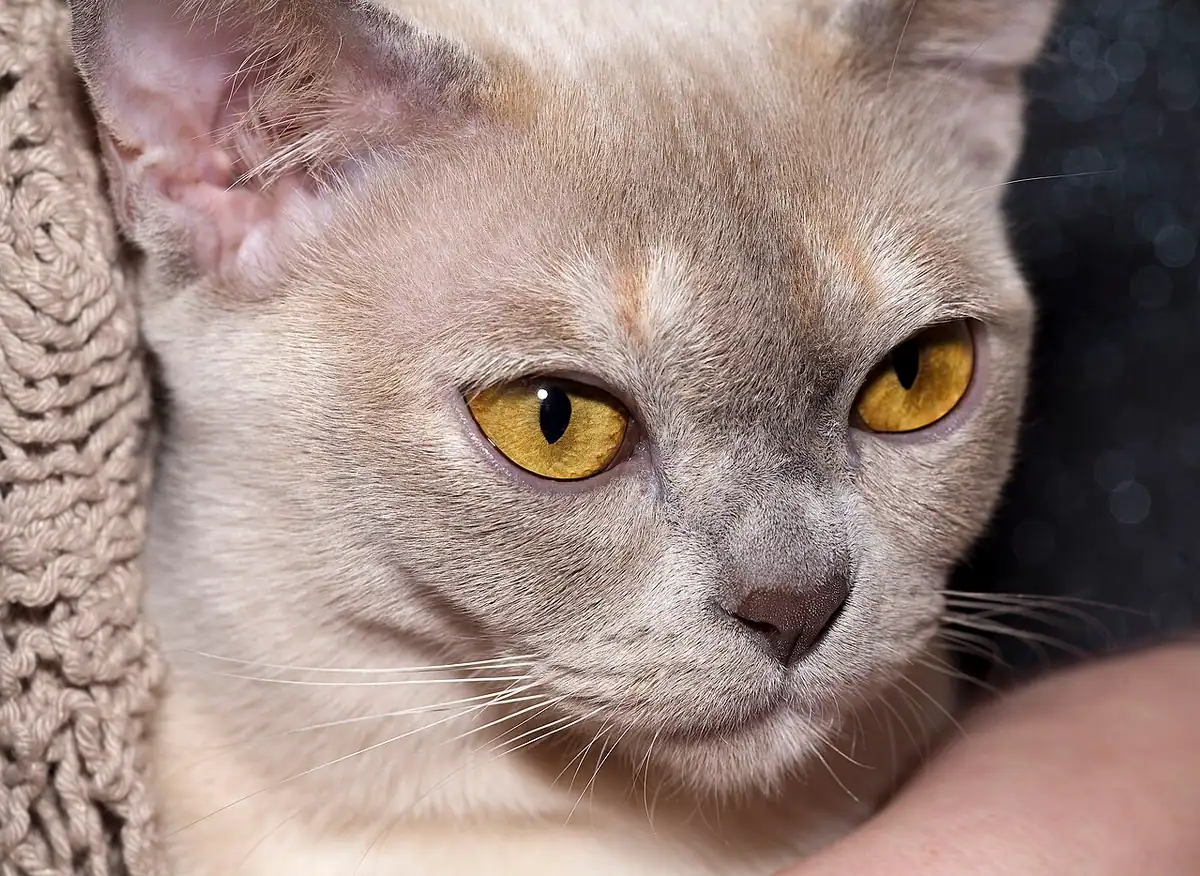
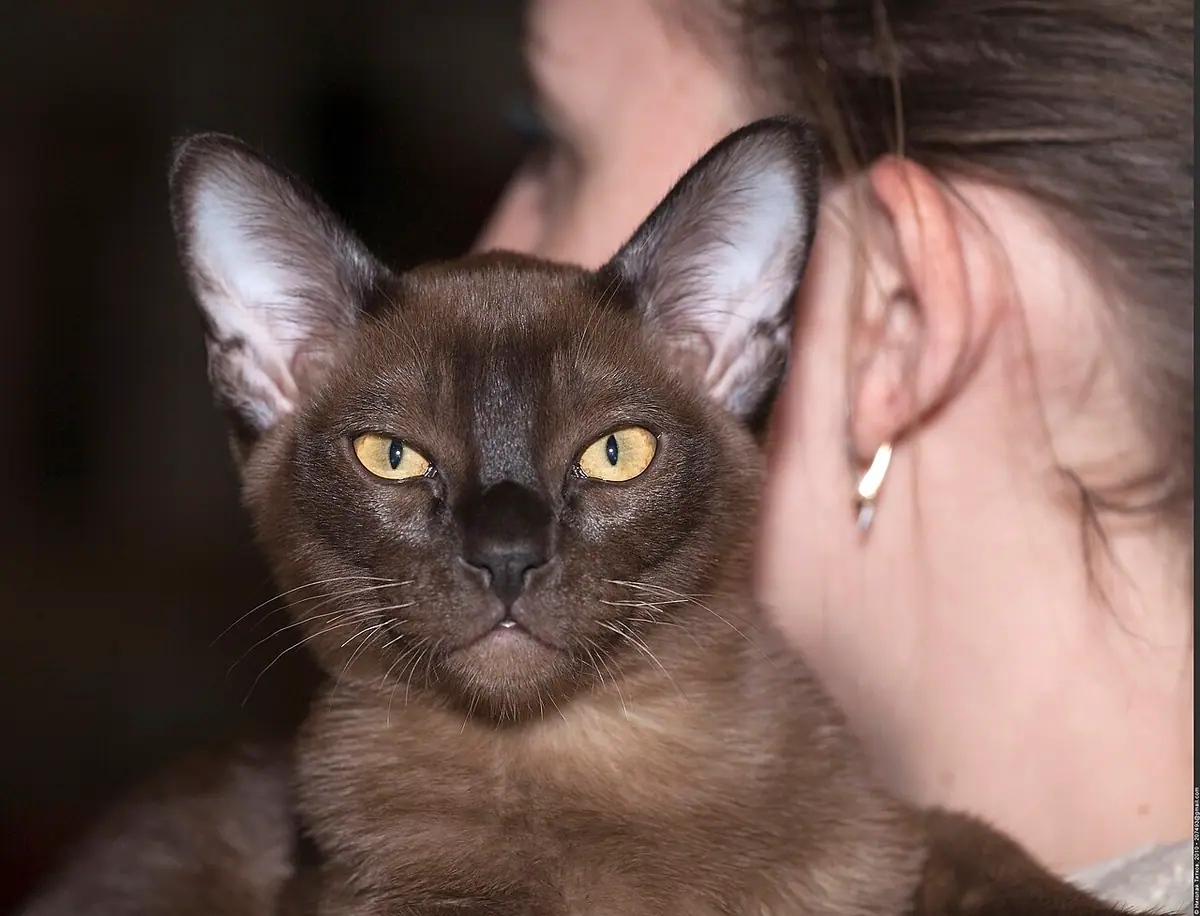
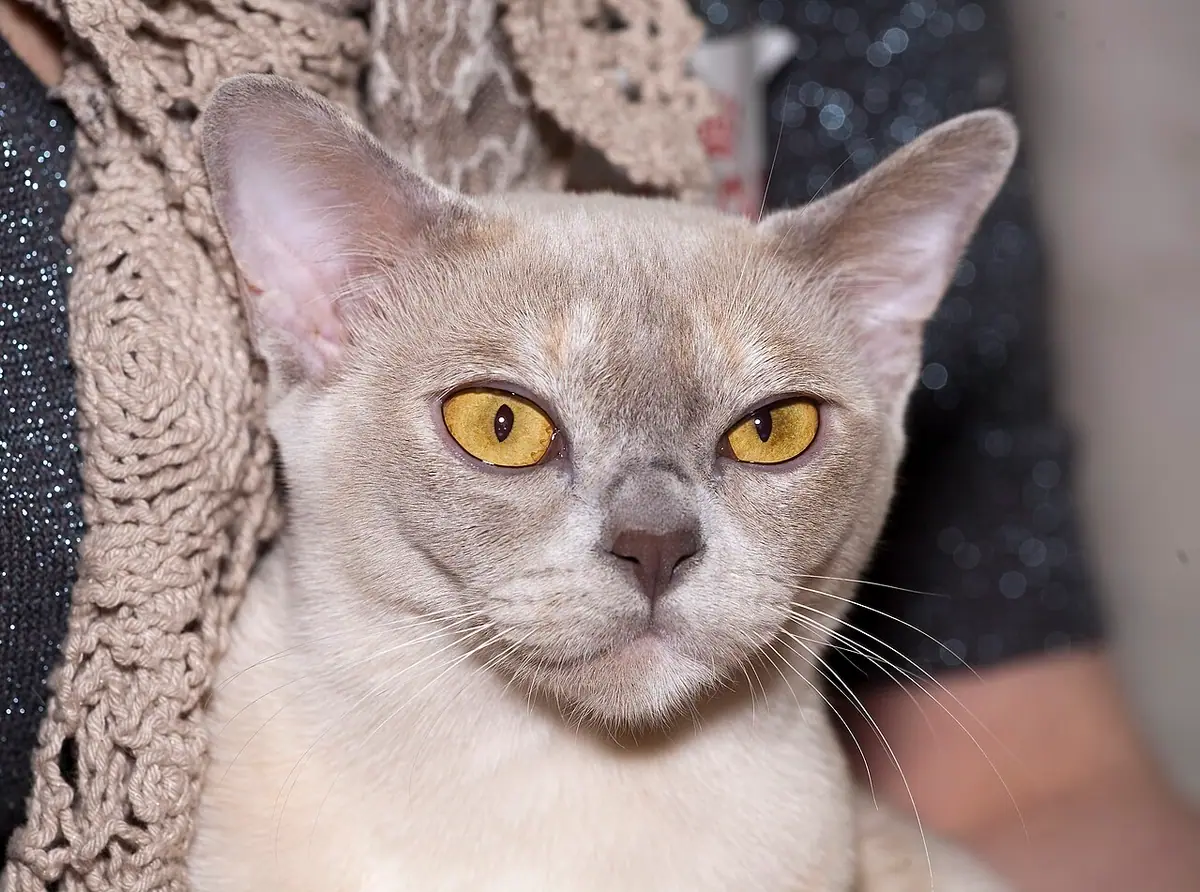
- Head: rounded, with a short broad muzzle and bright gold eyes set well apart, giving an innocent expression [1].
- Coat: very short, fine, glossy and satin-like [1].
- Colours (CFA): sable, champagne, platinum and blue [1]. Sable comes from a different TYR mutation than the Siamese points [2].
- Weight: males may reach or exceed 12 lb; females are usually smaller. Burmese are fully grown at about 18 months [1].
Photo gallery
7 photos · tap to enlarge- (enlarge, photo 1/7)
- (enlarge, photo 2/7)
- (enlarge, photo 3/7)
- (enlarge, photo 4/7)
- (enlarge, photo 5/7)
- (enlarge, photo 6/7)
- (enlarge, photo 7/7)
.jpg)
Photos: Wikimedia Commons - author & licence shown when enlarged and on the Photo credits page.
Temperament
Burmese are curious, clever and friendly, adore their people and are known to be good with children [1]. They usually like, or at least tolerate, the family dog [1]. They learn fetch readily [1]. They don't pick one favourite person; everyone within reach gets affection [1]. Spirited kittens mellow with age but stay playful into old age [1]. They're generally soft-spoken but will tell you if something's wrong [1].
Care
Health
- Hypokalaemia: a Recessive gene: The trait only shows when a cat gets the gene from both parents; carriers look normal. All terms inherited disease caused by a WNK4 mutation, with episodes of muscle weakness; a DNA: The genetic material in cells; a DNA test shows whether a cat carries a disease gene. All terms test exists [5].
- Head defect: an ALX1 variant causes a severe, usually lethal craniofacial defect in kittens with two copies [6].
- FIP (Feline infectious peritonitis): A serious disease caused by a mutated feline coronavirus; needs a vet. All terms : once above average; CFA says selective breeding has brought it down to the level of other breeds [1].
- Diabetes: some sources suggest older cats may be predisposed, but heritability research is inconclusive [1].
- Lifespan: Median: The middle value: half the cats lived shorter than this, half lived longer. All terms 14.3 years (31 cats) [3]; life expectancy about 14.4 years, among the highest in a 2024 UK study [4]. Purina UK estimates 10–16 years [13].
Ask the breeder about the parents' DNA tests, and talk to your vet about any specific concern.
Don't confuse with…
Ask your vet. This information is for reference only and does not replace a veterinary diagnosis.
Cat facts
Frequently asked questions
Are the Burmese and the Birman the same breed?
No. The names are easy to mix up, but they're very different. The Burmese is short-haired, glossy, solid-coloured and gold-eyed [1]. The Birman, the "Sacred Cat of Burma", is a long-haired Colorpoint: A pale body with darker face, ears, legs and tail, like a Siamese. All terms with blue eyes and four white feet [7].
How long do Burmese cats live?
In UK veterinary records, the Median: The middle value: half the cats lived shorter than this, half lived longer. All terms lifespan of 31 Burmese was 14.3 years [3]. A 2024 UK study estimated life expectancy at birth at about 14.4 years, among the highest of the breeds studied [4].
Similar breeds


Breed photos: Wikimedia Commons (CC0 / CC BY / CC BY-SA) - authors & licences on the Photo credits page.
References
- CFA, Burmese (breed profile & standard)
- Lyons LA et al. (2005). Tyrosinase mutations associated with Siamese and Burmese patterns in the domestic cat. Animal Genetics 36:119–126
- O'Neill DG et al. (2015). Longevity and mortality of cats attending primary care veterinary practices in England. J Feline Med Surg 17(2)
- Teng KT et al. (2024). Life tables of annual life expectancy and risk factors for mortality in cats in the UK. J Feline Med Surg 26(5)
- Gandolfi B et al. (2012). First WNK4-hypokalemia animal model identified by genome-wide association in Burmese cats. PLoS ONE 7(12):e53173
- Lyons LA et al. (2016). Aristaless-like homeobox protein 1 (ALX1) variant associated with craniofacial structure and frontonasal dysplasia in Burmese cats. Developmental Biology 409(2)
- CFA, Birman (breed profile & standard)
- CFA, Bombay (breed profile & standard)
- CFA, Tonkinese (breed profile & standard)
- FIFe, Breeds (BUR Burmese, fully recognised)
- TICA, Browse All Breeds (Burmese listed)
- GCCF, Cat Breeds (Burmese breed card)
- Purina UK, Burmese cat breed information
Accessed: 2026-10-02
CFA, TICA, FIFe and GCCF are the major cat registries in the US, Europe and the UK. See the glossary
Written by Catopedia from the sources above. Photos credit their author and licence under each image and on the Photo credits & licences.