Cat breed · Canada
Tonkinese
Mèo Tonkinese

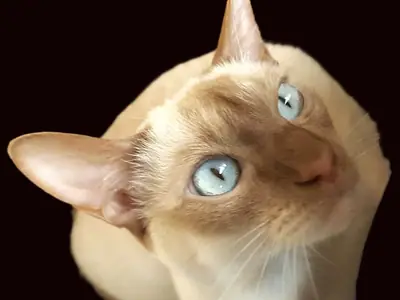
If ever a cat breed could be called a "happy medium", it's the Tonkinese [1]. Developed from the Siamese and Burmese to sit midway between them, it's a medium-sized cat with a short, silky coat and, in the mink pattern, aqua eyes [1][2]. Tonks are gregarious, intelligent and devoted to their people [1]. The breed is recognised by CFA (Cat Fanciers' Association): The world's largest registry of pedigree cats, based in the US. It keeps pedigree records, writes breed standards and runs cat shows. All terms [1], TICA (The International Cat Association): An international cat registry based in the US and one of the largest. It often recognizes newer breeds before CFA does. All terms [2] and GCCF (Governing Council of the Cat Fancy): The UK's oldest pedigree cat registry (since 1910). All terms [3]; FIFe (Fédération Internationale Féline): The International Feline Federation, an umbrella body of cat clubs, mostly in Europe. All terms does not list it [6].
Contents (10 sections)
Quick facts
- Origin
- Developed in North America from Siamese × Burmese crosses; first recognised in Canada in 1960
- Weight
- ~2.7–5.4 kg
- Lifespan
- ~12–16+ years
- Coat
- short, silky
- Energy
- high
Details & sources
- Size
- Medium, neither Cobby: A short, compact, sturdy body with a broad chest and short legs. All terms like the Burmese nor svelte like the Siamese; muscular and surprisingly heavy [1]
- Weight
- TICA (The International Cat Association): An international cat registry based in the US and one of the largest. It often recognizes newer breeds before CFA does. All terms : males 8–12 lb (3.6–5.4 kg), females 6–8 lb (2.7–3.6 kg) [2]; GCCF (Governing Council of the Cat Fancy): The UK's oldest pedigree cat registry (since 1910). All terms estimates 6–12 lb (2.7–5.4 kg) [3]
Traits (scale 1–5)
- Energy
- 4/5
- Shedding
- 2/5
- Grooming needs
- 1/5
- Good with kids
- 5/5
- Vocal
- 4/5
- Independence
- 1/5
Basis: Editorial estimate based on CFA (Cat Fanciers' Association): The world's largest registry of pedigree cats, based in the US. It keeps pedigree records, writes breed standards and runs cat shows. All terms and TICA descriptions, not a measurement
Recognized by major cat registries
Cat registries keep pedigree records and set the standard for each breed. Tap an abbreviation to see what it means.
| CFA (Cat Fanciers' Association): The world's largest registry of pedigree cats, based in the US. It keeps pedigree records, writes breed standards and runs cat shows. All terms US | Yes |
|---|---|
| TICA (The International Cat Association): An international cat registry based in the US and one of the largest. It often recognizes newer breeds before CFA does. All terms international, US-based | Yes |
| FIFe (Fédération Internationale Féline): The International Feline Federation, an umbrella body of cat clubs, mostly in Europe. All terms Europe | No |
| GCCF (Governing Council of the Cat Fancy): The UK's oldest pedigree cat registry (since 1910). All terms UK | Yes |
History
Most Tonkinese descend from one cat, Wong Mau, who was also the foundation of the Burmese breed [1]. A small walnut-brown female with darker head, legs and tail, she was brought to America in 1930 and was eventually determined to be a natural mink Tonkinese [1]. Bred to Siamese, she produced three types of kitten: some like her, some Siamese-marked and some solid brown. The solid browns founded the Burmese, while those resembling Wong Mau were used to produce more Tonkinese [1]. TICA adds that in the 1960s Jane Barletta in the US and Margaret Conroy in Canada worked together to develop a breed midway between the two [2]. The breed was first recognised in Canada in 1960; CFA accepted it for registration in 1982, mink cats for championship in 1984, and pointed and solid cats in 2002 [1].
Appearance
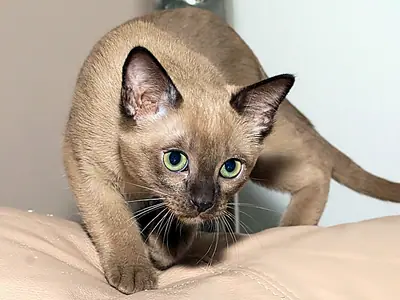
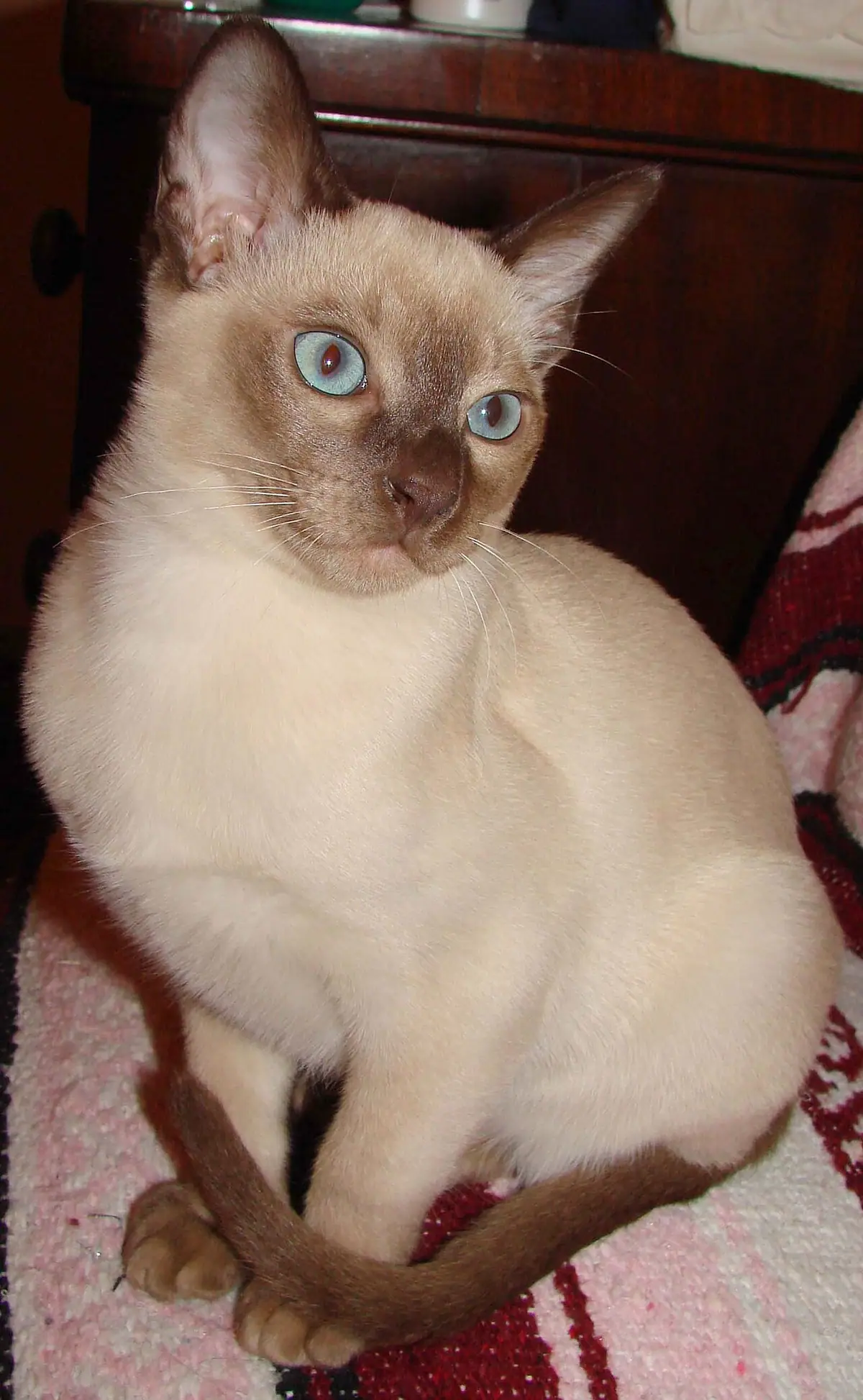
- Body: medium, neither Cobby: A short, compact, sturdy body with a broad chest and short legs. All terms like the Burmese nor svelte like the Siamese; dense, muscular and surprisingly heavy [1].
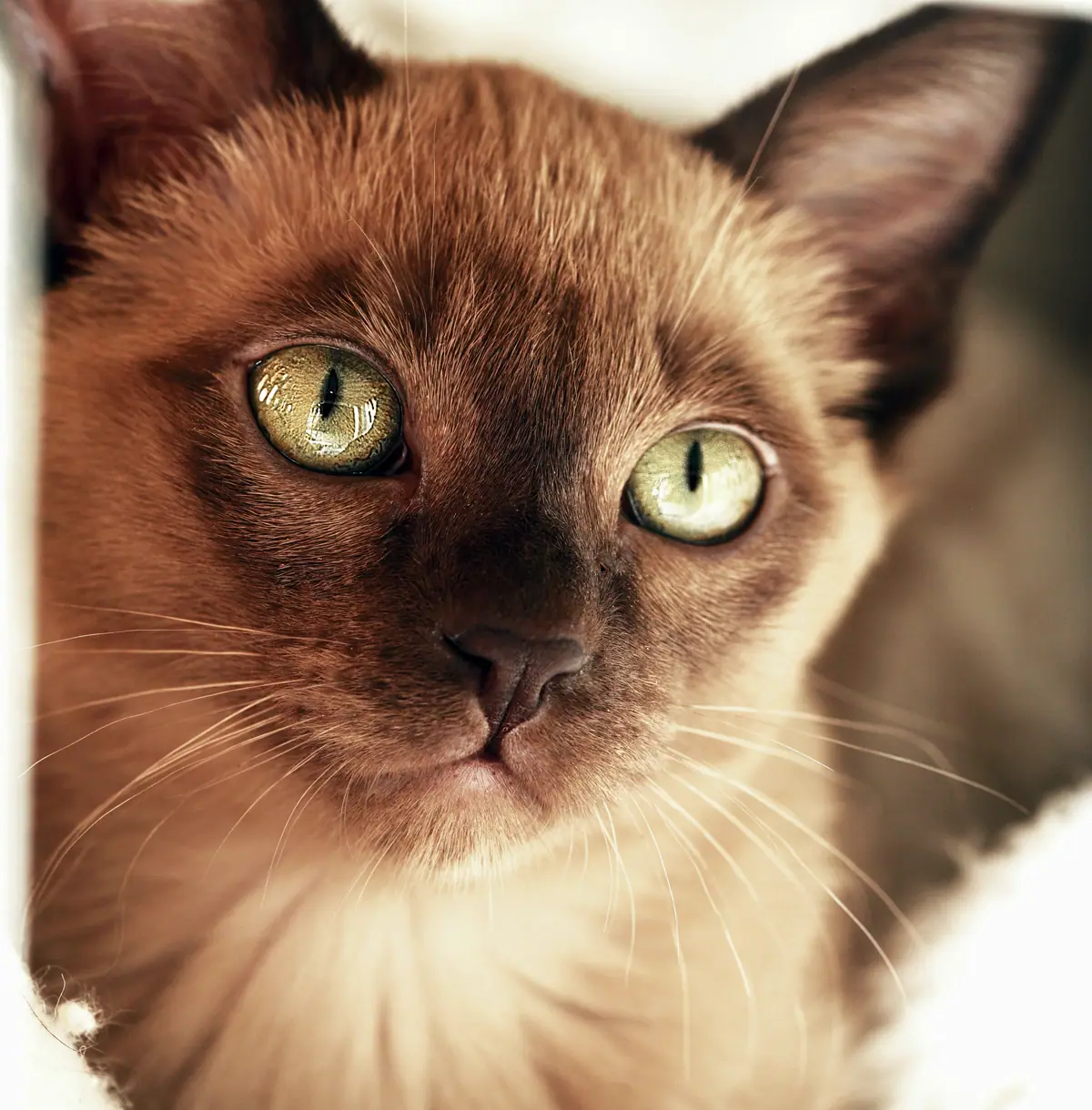
- Head: a modified wedge, slightly longer than wide, with a rounded muzzle; ears set as much on the sides as on top [1].
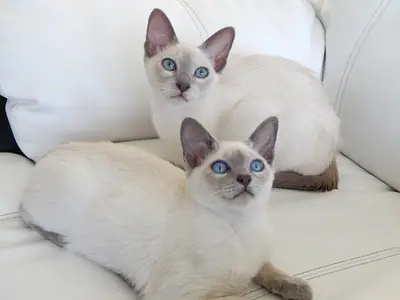
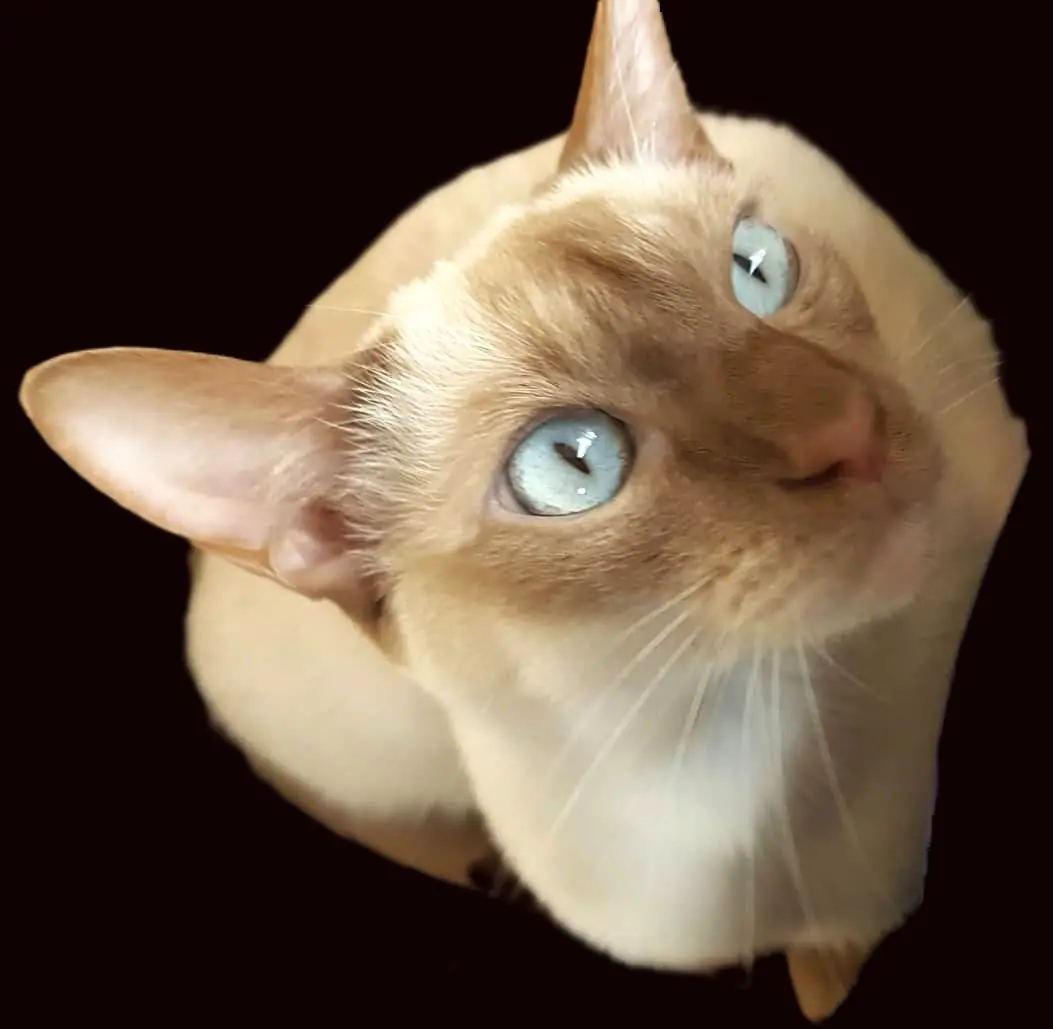
- Eyes: open almond-shaped: aqua in minks, green in solids, blue in pointeds [1].
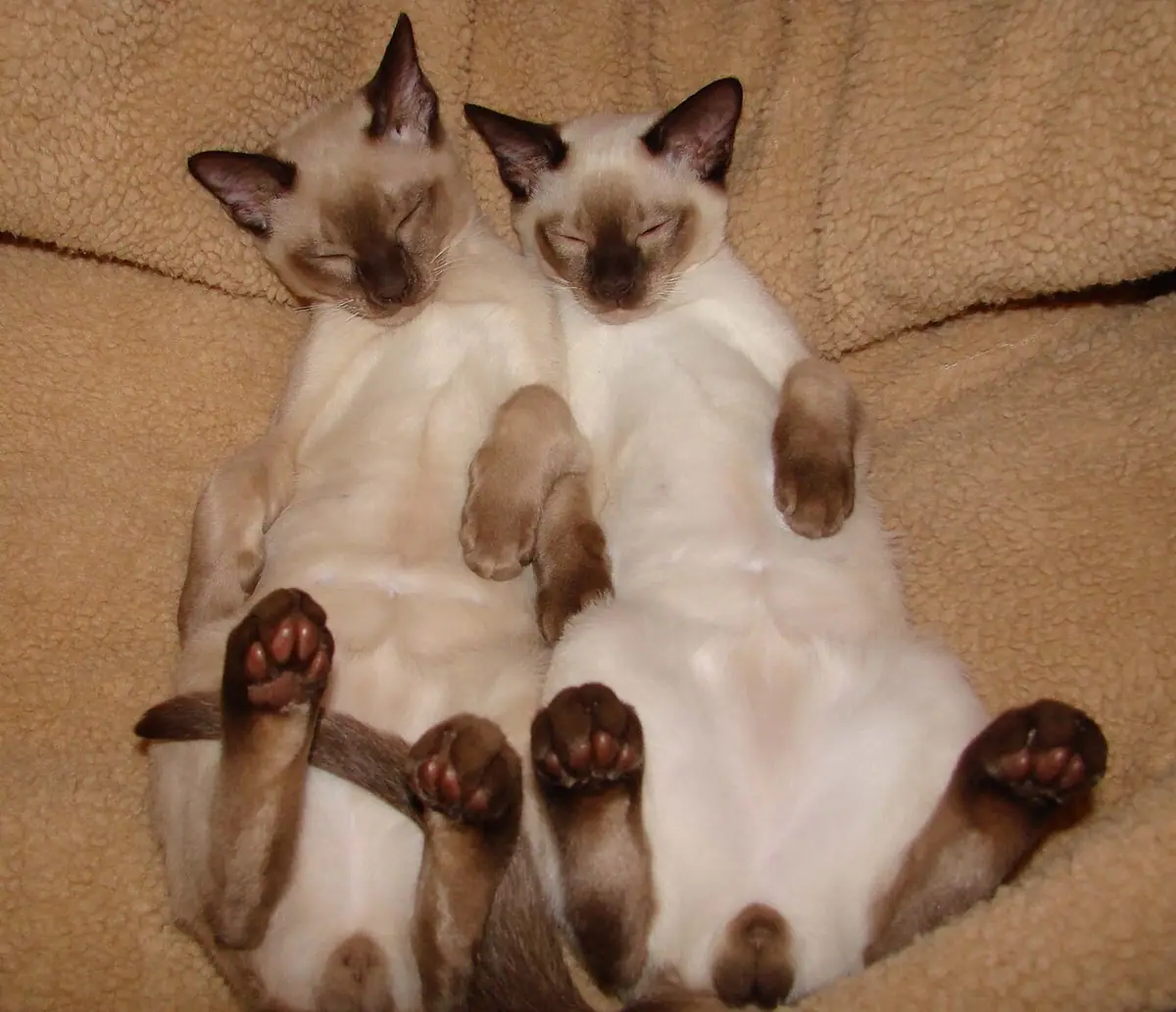
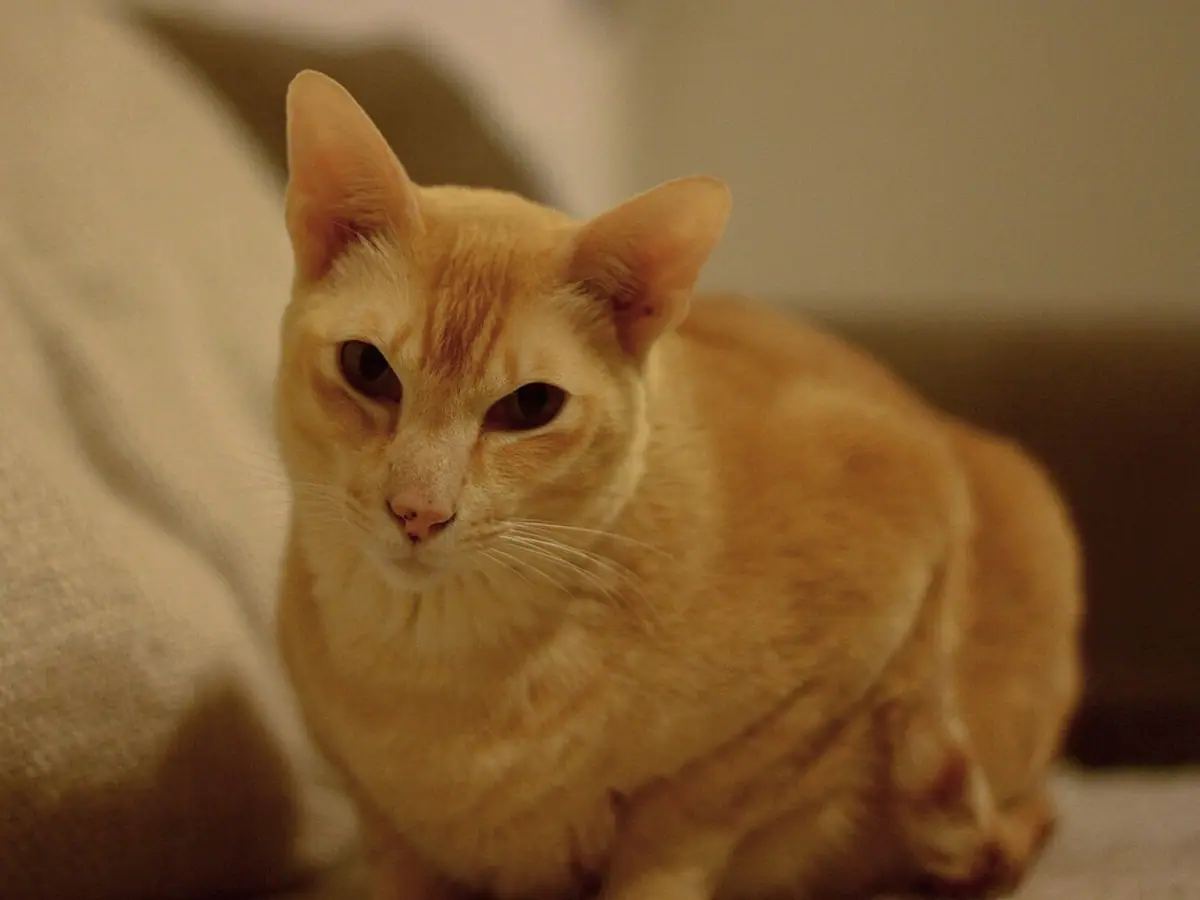
- Patterns: mink (darker points blending gradually into the body) is the pattern most associated with the breed; solid and pointed are also accepted [1][2].
- Coat: short, close-lying and silky [1][2].
Photo gallery
7 photos · tap to enlarge- (enlarge, photo 1/7)
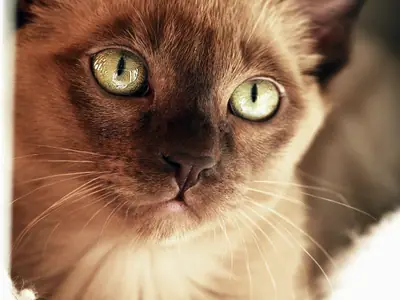
- (enlarge, photo 2/7)
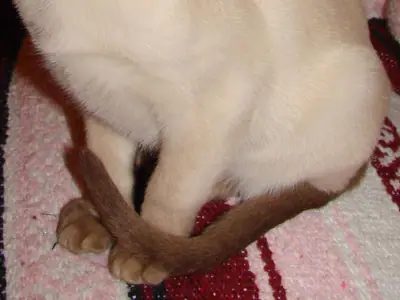
- (enlarge, photo 3/7)
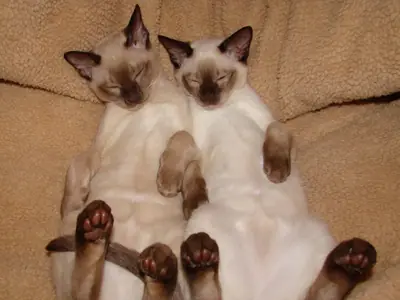
- (enlarge, photo 4/7)
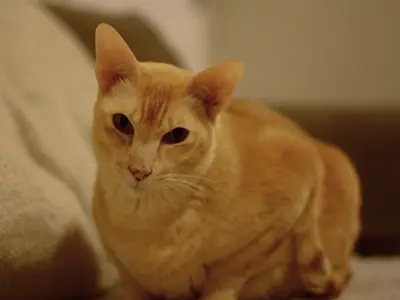
- (enlarge, photo 5/7)
- (enlarge, photo 6/7)
- (enlarge, photo 7/7)
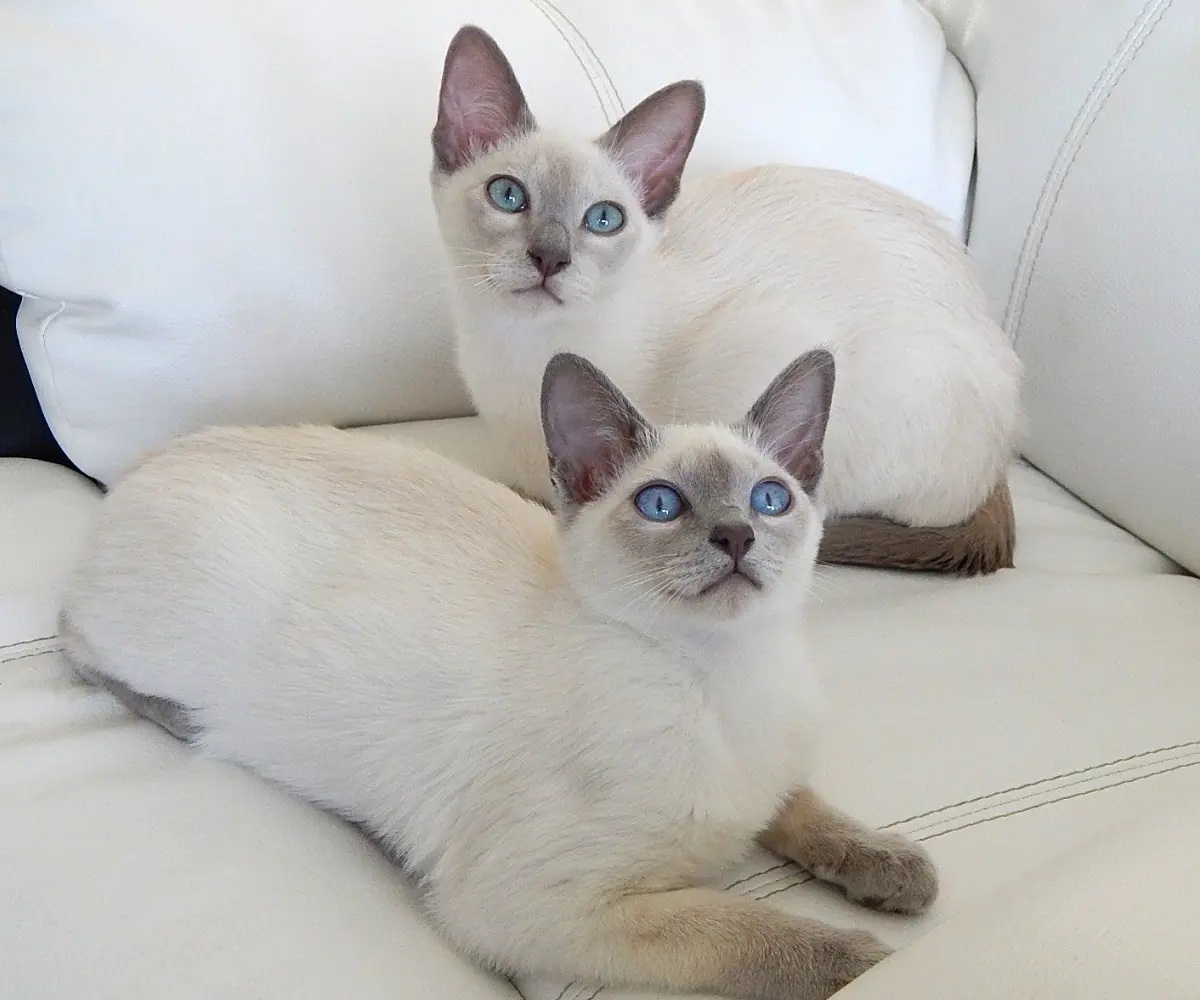
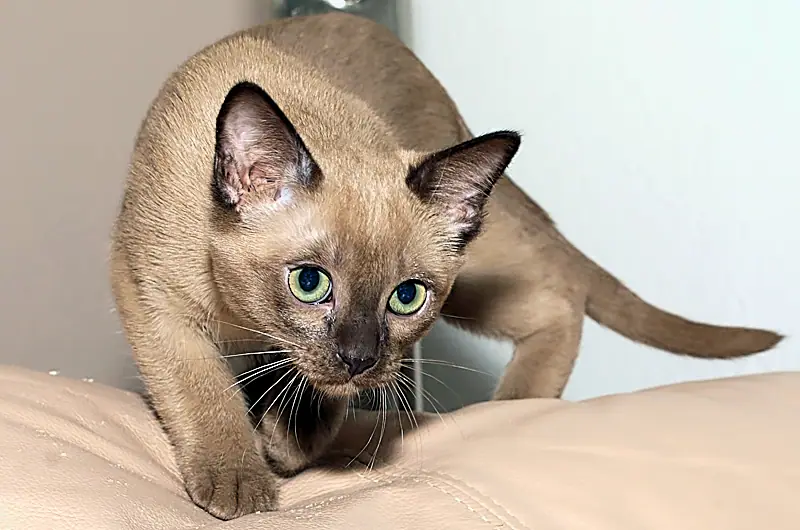

Photos: Wikimedia Commons - author & licence shown when enlarged and on the Photo credits page.
Temperament
Intelligent, gregarious and outgoing, Tonks assume we exist to love and cater to them, so expect a cat on your lap or shoulder supervising everything [1]. They have excellent memories and quickly learn what you don't want them to do (and do it while you're out) [1]. They're sensitive to moods and may appear with a comforting purr after a bad day [1]. They get on with dogs, other pets, children and guests, often greeting visitors at the door [1]. They're talkative [1], though TICA says less so than a Siamese [2], and they don't like being left alone [2].
Care
Health
- Gingivitis in older cats: CFA's only breed-specific concern [1].
- Other conditions TICA lists: dental disease, FLUTD (Feline lower urinary tract disease): Problems of the bladder and urethra: painful, difficult or bloody urination. All terms , inflammatory bowel disease and amyloidosis [2].
- Genetic background: CFA says their mixed heritage makes Tonkinese genetically diverse and generally robust [1].
- Lifespan: TICA estimates 12–16+ years [2] and GCCF 15+ years [3]. These are registry estimates; we found no breed-specific study.
This is general information; talk to your vet about any specific concern.
Don't confuse with…
Ask your vet. This information is for reference only and does not replace a veterinary diagnosis.
Cat facts
Frequently asked questions
Is the Tonkinese a Siamese–Burmese cross?
In origin, yes: the breed was developed from the Siamese and Burmese to sit midway between them [1][2]. After years of selective breeding, though, it's a breed in its own right with its own look and personality [1], registered by CFA (Cat Fanciers' Association): The world's largest registry of pedigree cats, based in the US. It keeps pedigree records, writes breed standards and runs cat shows. All terms since 1982 [1].
Are Tonkinese cats vocal?
Yes, though less than a Siamese. CFA says they talk in complete sentences that require a prompt response [1]; TICA (The International Cat Association): An international cat registry based in the US and one of the largest. It often recognizes newer breeds before CFA does. All terms says they speak when spoken to rather than narrating every move [2].
Can a Tonkinese be left alone?
They don't like it. TICA suggests considering a second cat for company when you're away [2].
Similar breeds


Breed photos: Wikimedia Commons (CC0 / CC BY / CC BY-SA) - authors & licences on the Photo credits page.
References
- CFA, Tonkinese (breed profile & standard)
- TICA, Tonkinese (breed profile)
- GCCF, Cat Breeds (Tonkinese breed card)
- CFA, Burmese (breed profile & standard)
- CFA, Siamese (breed profile & standard)
- FIFe, Breeds (Tonkinese not listed)
Accessed: 2026-10-02
CFA, TICA, FIFe and GCCF are the major cat registries in the US, Europe and the UK. See the glossary
Written by Catopedia from the sources above. Photos credit their author and licence under each image and on the Photo credits & licences.