Cat breed · Scotland
Scottish Fold
Mèo tai cụp Scotland

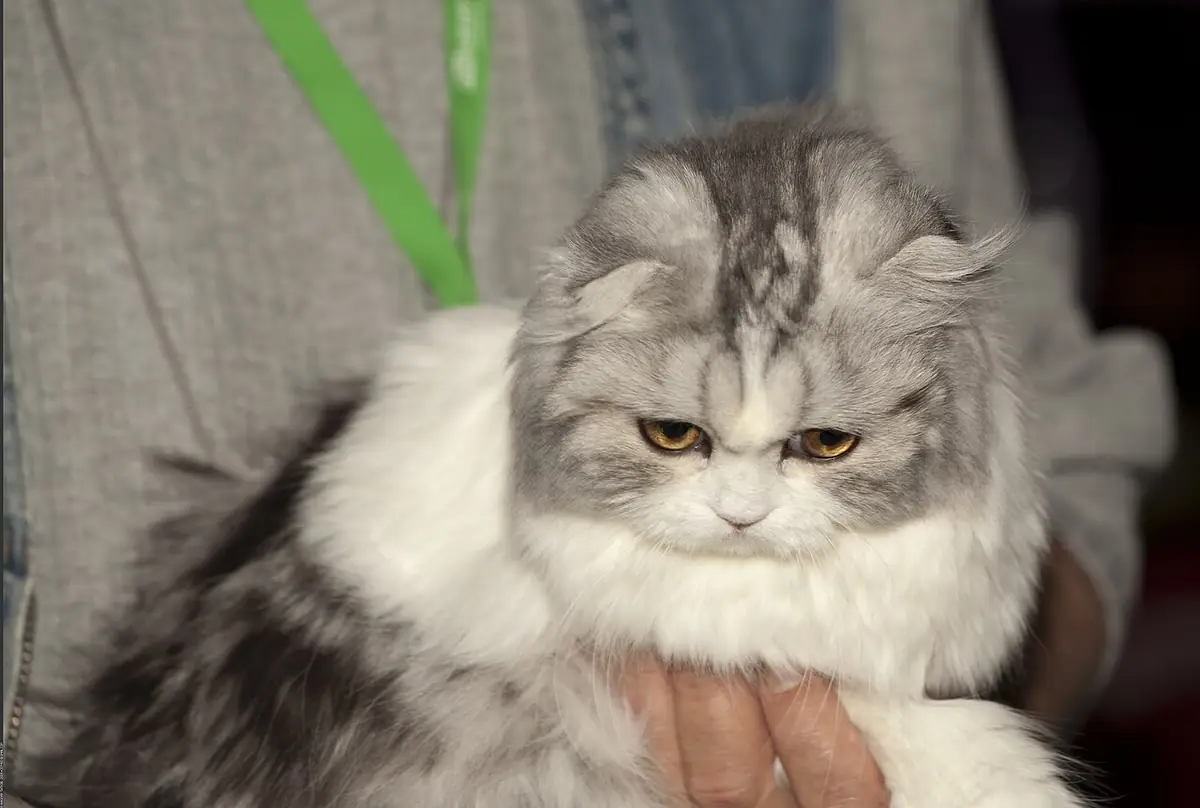
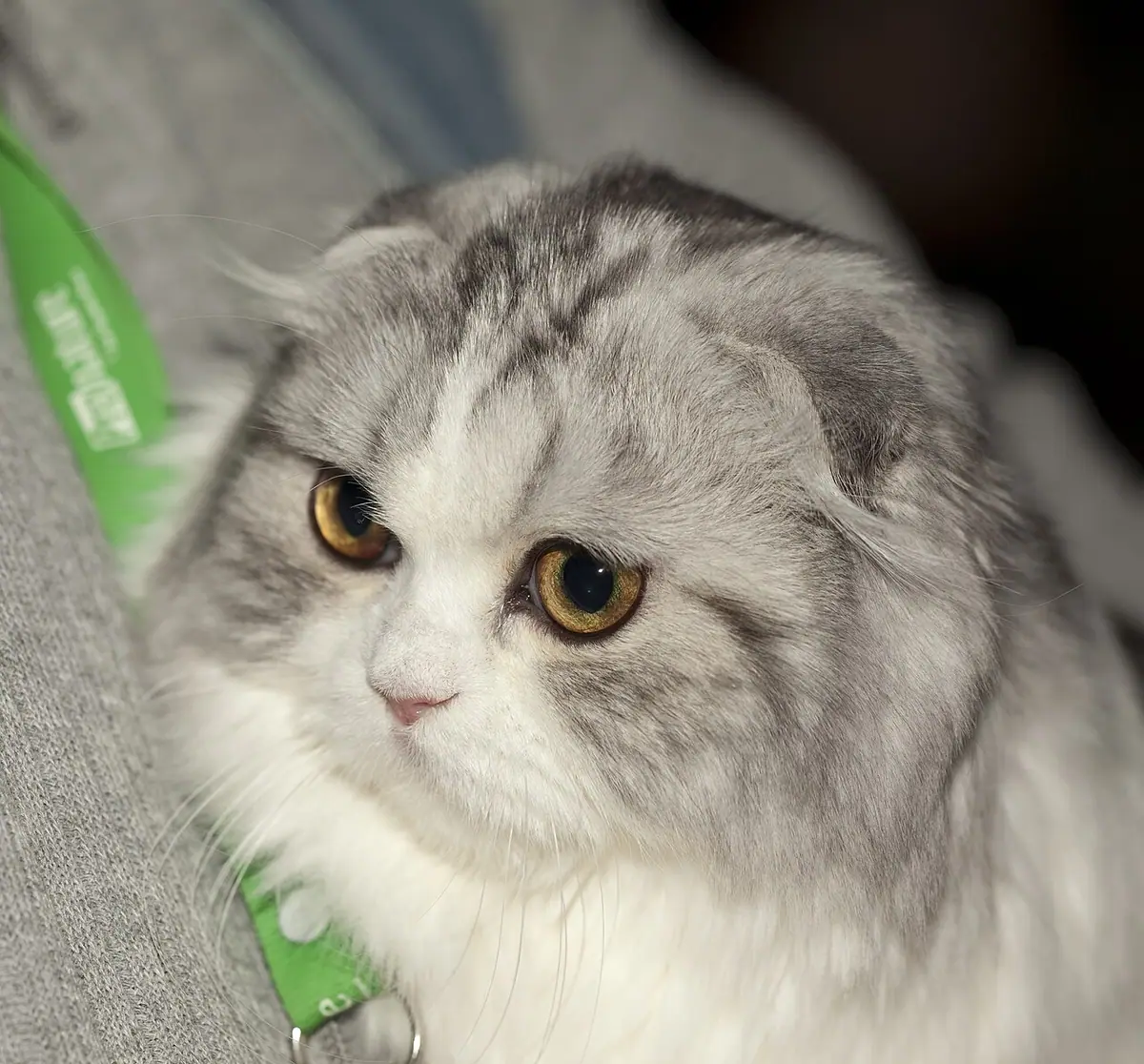
The Scottish Fold is known for ears that fold forward against the head, which make its round face and big round eyes look almost owl-like [1]. Folds are calm, loving and people-oriented without being demanding [1]. The mutation behind the folded ears also affects cartilage and bone; see the note below [2][3]. CFA (Cat Fanciers' Association): The world's largest registry of pedigree cats, based in the US. It keeps pedigree records, writes breed standards and runs cat shows. All terms and TICA (The International Cat Association): An international cat registry based in the US and one of the largest. It often recognizes newer breeds before CFA does. All terms recognise the breed [1][7], but it isn't on FIFe (Fédération Internationale Féline): The International Feline Federation, an umbrella body of cat clubs, mostly in Europe. All terms 's or GCCF (Governing Council of the Cat Fancy): The UK's oldest pedigree cat registry (since 1910). All terms 's breed lists [5][6].
Contents (10 sections)
Quick facts
- Origin
- Scotland (Tayside, 1961)
- Weight
- ~2.5–6 kg
- Lifespan
- ~11–15 years
- Coat
- short or long
- Energy
- low
Details & sources
Traits (scale 1–5)
- Energy
- 2/5
- Shedding
- 3/5
- Grooming needs
- 2/5
- Good with kids
- 4/5
- Vocal
- 2/5
- Independence
- 3/5
Basis: Editorial estimate based on CFA (Cat Fanciers' Association): The world's largest registry of pedigree cats, based in the US. It keeps pedigree records, writes breed standards and runs cat shows. All terms 's description, not a measurement
Recognized by major cat registries
Cat registries keep pedigree records and set the standard for each breed. Tap an abbreviation to see what it means.
| CFA (Cat Fanciers' Association): The world's largest registry of pedigree cats, based in the US. It keeps pedigree records, writes breed standards and runs cat shows. All terms US | Yes |
|---|---|
| TICA (The International Cat Association): An international cat registry based in the US and one of the largest. It often recognizes newer breeds before CFA does. All terms international, US-based | Yes |
| FIFe (Fédération Internationale Féline): The International Feline Federation, an umbrella body of cat clubs, mostly in Europe. All terms Europe | No |
| GCCF (Governing Council of the Cat Fancy): The UK's oldest pedigree cat registry (since 1910). All terms UK | No |
History
In 1961 a shepherd named William Ross spotted the first Fold, a copper-eyed white female called Susie, on a farm in Tayside, Scotland [1]. Susie had only one litter, so her daughter Snooks became the foundation queen. Snooks was bred first to a domestic male and then to a British Shorthair, and produced fold-eared kittens with both [1]. The folded ears come from a dominant gene considered a spontaneous mutation [1]. CFA granted championship status to shorthaired Folds in 1978 and longhairs in 1992. Straight-eared cats were accepted in 2022, giving the breed four divisions [1].
Appearance
- Overall: "round" is the word. Medium-sized, with a well-padded body and strong legs [1].
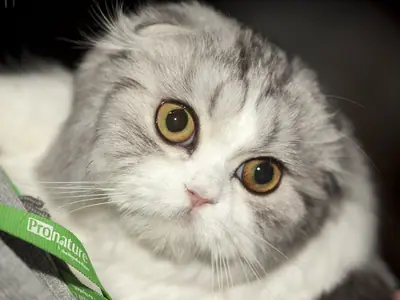
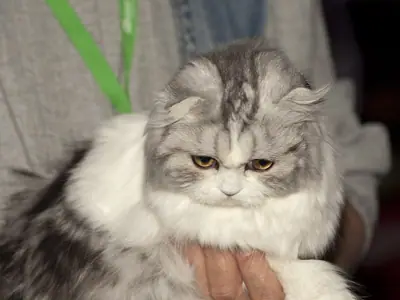
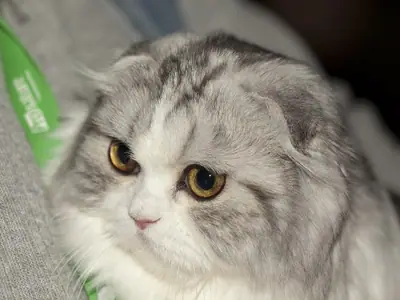
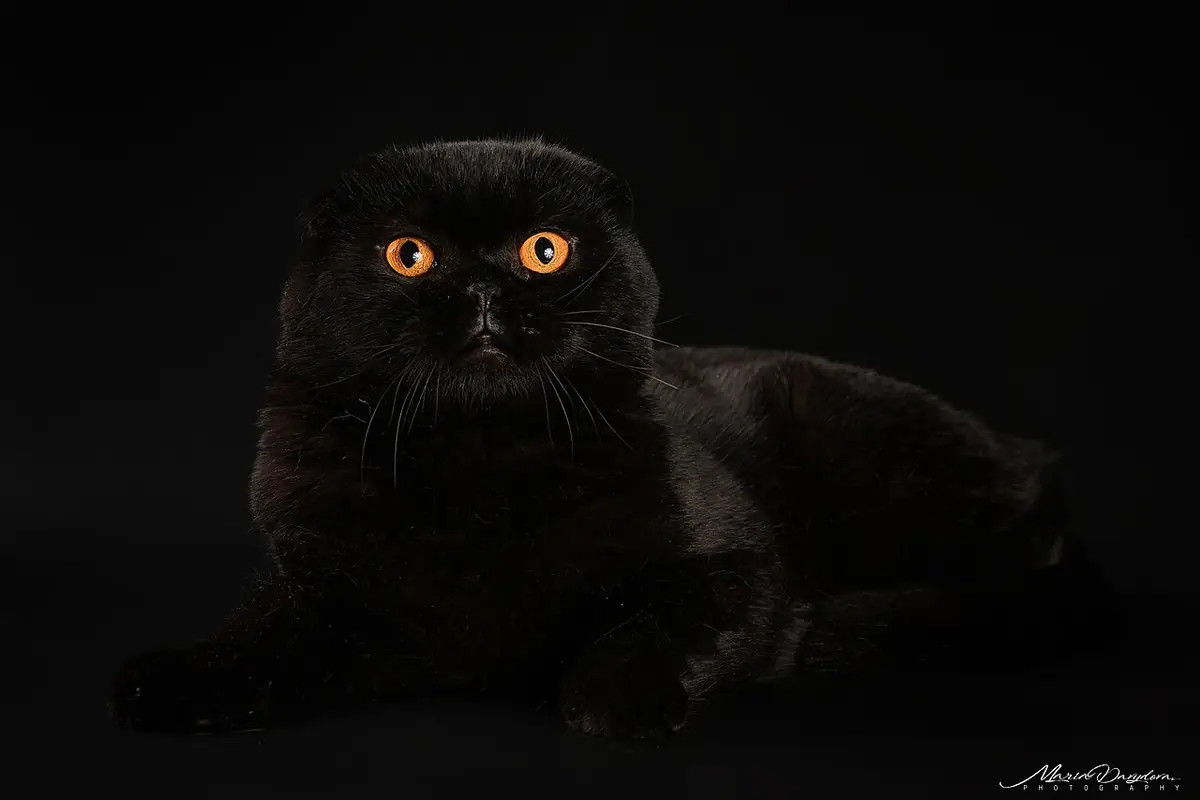
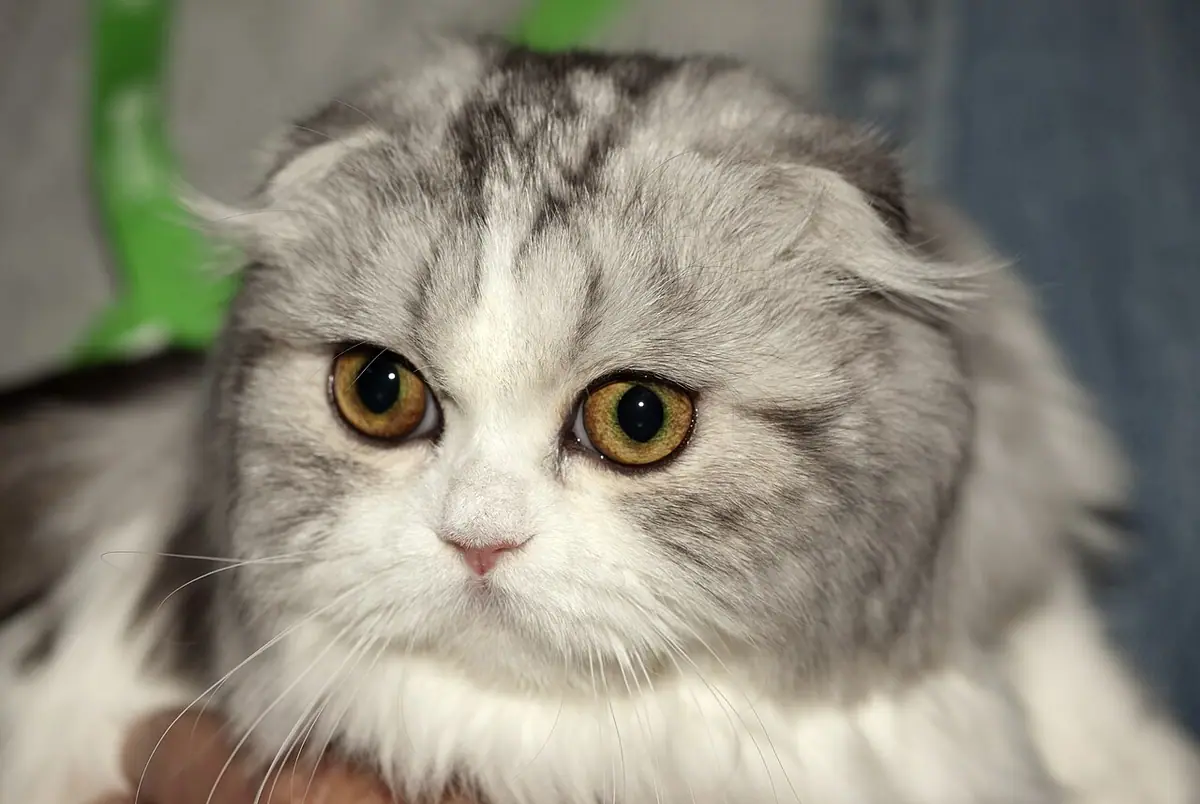
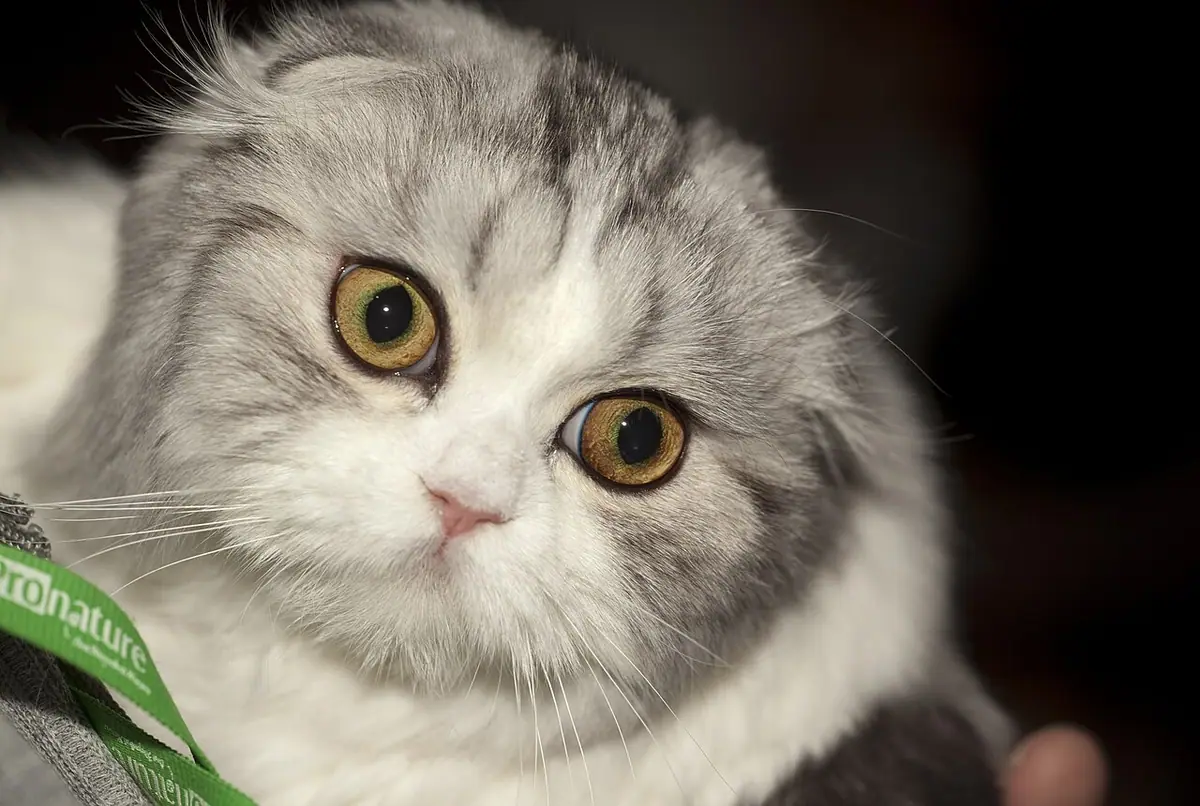
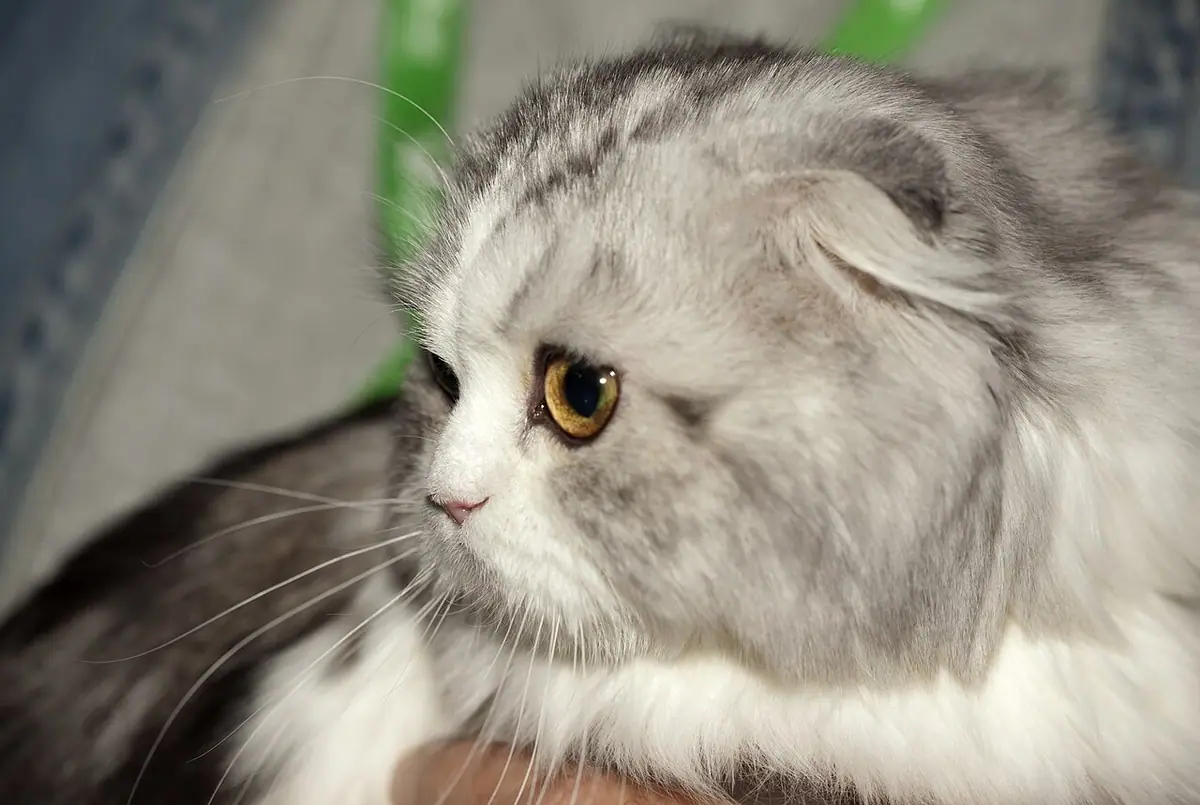
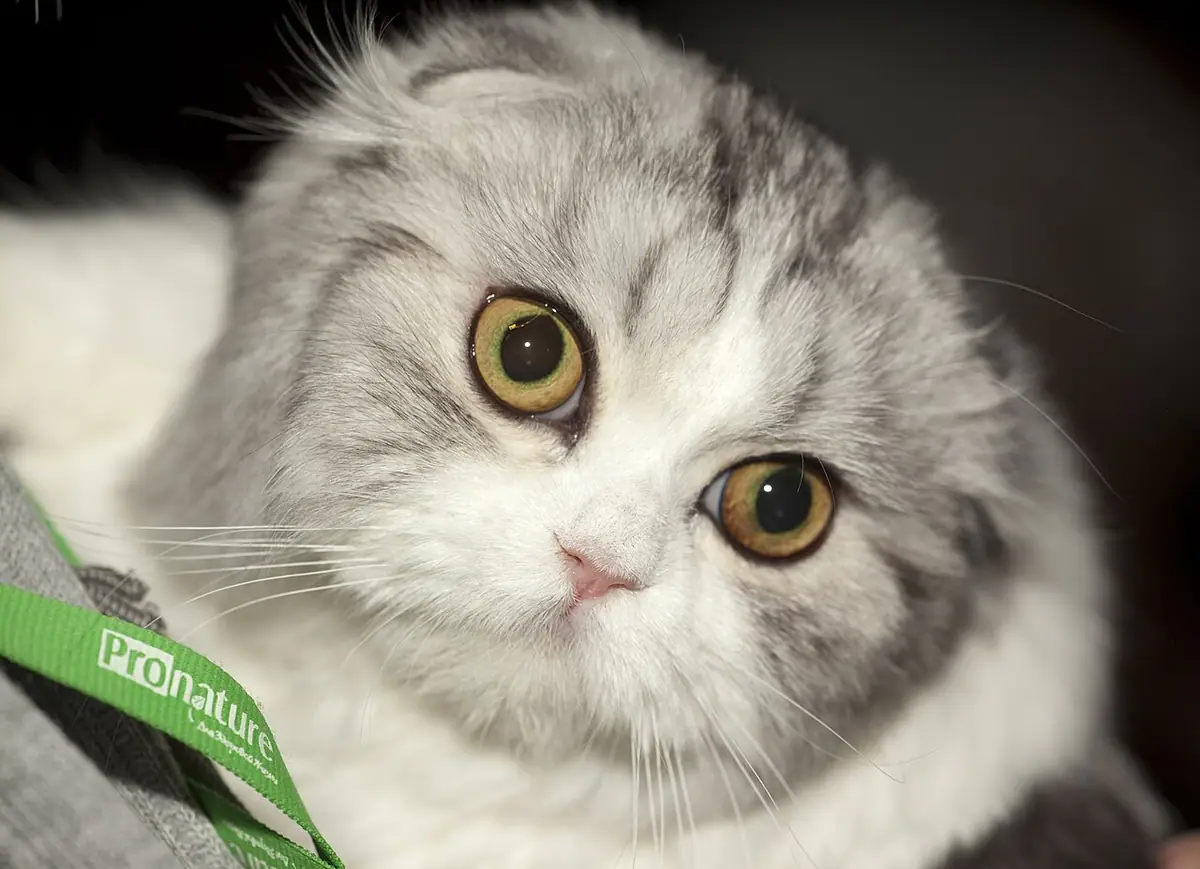
- Head and ears: a strikingly round head thanks to the cap-like folded ears, which have rounded tips and don't affect hearing [1].
- Eyes: very round and bright [1].
- Tail: medium to long and in proportion. CFA advises gently checking its flexibility often [1].
- Coat: shorthair or longhair [1].
Photo gallery
7 photos · tap to enlarge- (enlarge, photo 1/7)
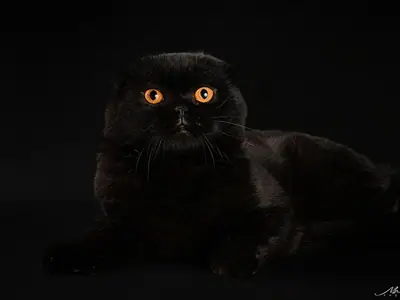
- (enlarge, photo 2/7)
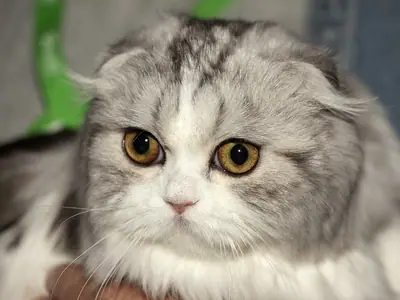
- (enlarge, photo 3/7)
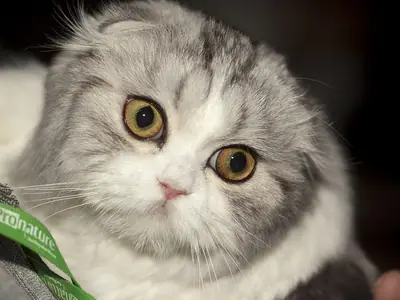
- (enlarge, photo 4/7)
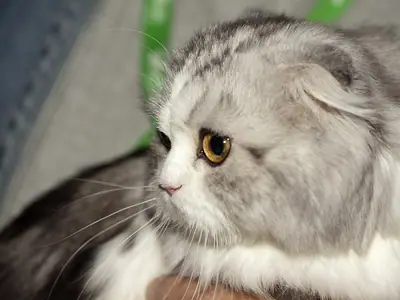
- (enlarge, photo 5/7)
- (enlarge, photo 6/7)
- (enlarge, photo 7/7)
.jpg)
Photos: Wikimedia Commons - author & licence shown when enlarged and on the Photo credits page.
Temperament
Folds are charming homebodies who enjoy human company without craving it [1]. They're quiet but not placid, and happy to play fetch [1]. They can be reserved with strangers and unfamiliar cats [1]. With their own people they're affectionate and even-tempered, usually patient with children, and will follow you around without getting in the way [1]. They don't do well left alone for long periods [1].
Care
- Comb shorthairs weekly; longhairs need more frequent attention to prevent tangles. Folds shed year-round, more heavily in spring and autumn [1].
- Monitor joints: keep an eye on gait, jumping and tail flexibility [1][2].
- A joint-friendly home: low beds or beds with steps, raised food and water bowls, low-sided litter trays, ramps and rugs on slippery floors [2].
Health
- Osteochondrodysplasia: the fold mutation, a dominant variant in the TRPV4 gene [3], also disrupts cartilage and bone development, leading to arthritis that can be severe and painful [2].
- Variable severity: some cats show no pain, others have mild signs that worsen. The disease can fuse the tail, ankles and knees [2].
- Diagnosis and treatment: vets use examination and X-rays. There's no cure for the underlying condition, but pain can be managed with medication [2].
- Lifespan: purina UK estimates 11–15 years [10].
If your cat walks stiffly, limps, avoids jumping, hides or grooms less, talk to your vet.
Don't confuse with…
- Scottish Straight: the same breed with straight ears; accepted by CFA in 2022 [1] and listed separately by TICA [7].
- British Shorthair: also round-faced and round-eyed, with upright ears [8].
- American Curl: ears curl backwards, the opposite direction to a Fold's [9].
Ask your vet. This information is for reference only and does not replace a veterinary diagnosis.
Cat facts
Frequently asked questions
Do Scottish Folds have health problems?
The mutation that folds the ears also affects cartilage and bone, causing Osteochondrodysplasia: Abnormal cartilage and bone growth causing painful, stiff joints and tail; linked to the folded-ear gene. All terms and arthritis that can be painful, with severity varying between cats [2][3]. Vets diagnose it by examination and X-rays, and can help manage pain [2].
How can I tell if my Scottish Fold is in pain?
Signs iCatCare (International Cat Care): A UK charity dedicated to cat health and welfare. All terms lists include reluctance to move, a stiff gait, limping, difficulty jumping on or off furniture, hiding, reduced appetite, toileting outside the tray and grooming less [2]. CFA (Cat Fanciers' Association): The world's largest registry of pedigree cats, based in the US. It keeps pedigree records, writes breed standards and runs cat shows. All terms also suggests gently checking tail flexibility often, since stiffness can be an early warning [1].
Is a Scottish Fold a British Shorthair?
No, they're separate breeds. British Shorthairs were used in developing the Fold, so they look alike, but the British Shorthair has upright ears [1][8].
Why do some registries not recognise the Scottish Fold?
Because of the bone and joint disease that comes with the fold mutation [2]. FIFe (Fédération Internationale Féline): The International Feline Federation, an umbrella body of cat clubs, mostly in Europe. All terms and GCCF (Governing Council of the Cat Fancy): The UK's oldest pedigree cat registry (since 1910). All terms don't list the breed [5][6], while CFA and TICA (The International Cat Association): An international cat registry based in the US and one of the largest. It often recognizes newer breeds before CFA does. All terms still recognise it [1][7].
Similar breeds


Breed photos: Wikimedia Commons (CC0 / CC BY / CC BY-SA) - authors & licences on the Photo credits page.
References
- CFA, Scottish Fold (breed profile & standard)
- International Cat Care, Scottish Fold osteochondrodysplasia (updated 26 Sep 2025)
- Gandolfi B et al. (2016). A dominant TRPV4 variant underlies osteochondrodysplasia in Scottish fold cats. Osteoarthritis Cartilage 24(8):1441–1450
- International Cat Care, Feline conformational health and welfare in cat breeding (position statement)
- FIFe, Breeds (Scottish Fold not listed)
- GCCF, Cat Breeds (Scottish Fold not listed)
- TICA, Browse All Breeds (lists Scottish Fold and Scottish Straight, short- and longhair)
- CFA, British Shorthair (breed profile & standard)
- CFA, American Curl (breed profile & standard)
- Purina UK, Scottish Fold cat breed information
Accessed: 2026-10-02
CFA, TICA, FIFe and GCCF are the major cat registries in the US, Europe and the UK. See the glossary
Written by Catopedia from the sources above. Photos credit their author and licence under each image and on the Photo credits & licences.